English
Views: 0 Author: Site Editor Publish Time: 2026-11-09 Origin: Site


Manual packaging can be a practical choice for uncertain demand, frequent product changes, or labor-intensive loading tasks that are difficult to automate. A blister machine becomes worth evaluating when repeatable packaging work limits output or requires substantial labor.
However, automation does not automatically mean lower costs. The result depends on utilization, staffing, materials, changeovers, maintenance, and the number of acceptable packs produced.
A useful comparison starts with the same product, finished package, and quality requirements.
Table of Contents
“Manual packaging” and “blister machine” are not exact opposites.
A manually operated process may already use preformed blisters, fixtures, or sealing equipment. An automatic blister machine may still require operators to load products, replenish materials, inspect packs, and manage changeovers.
For a fair comparison, define the process boundaries:
Who forms or supplies the blister?
How are products loaded?
How is the backing positioned and sealed?
Who inspects and removes finished packs?
Are labeling and cartoning included?
How many people support the complete process?
If the current method uses a different package, separate the cost of changing the packaging format from the cost of automation.
Evaluation area | Mainly manual process | Machine-assisted blister process |
|---|---|---|
Initial investment | Often lower when existing tools and fixtures are sufficient | Includes equipment, tooling, installation, and training |
Labor | More direct handling may be required | Staffing depends on feeding, inspection, and downstream automation |
Output | Depends on work method, staffing, and task balance | Depends on machine configuration and the complete line |
Changeovers | Can be flexible, but may still require fixtures and setup | May require tooling changes, adjustments, and trial packs |
Quality control | Relies on suitable equipment, procedures, and inspection | Can improve repeatability, but still needs process control |
Operating cost | Strongly influenced by labor and rework | Includes labor, energy, maintenance, and equipment utilization |
Best reason to evaluate | Flexibility and limited capital commitment | Repeatable demand and an identifiable production constraint |
The appropriate choice should follow measured production data rather than a fixed order-volume threshold.
A blister-machine budget should include more than the purchase price.
Check tooling, product-feeding equipment, utilities, installation, commissioning, training, spare parts, and any downstream modifications.
For manual packaging, include fixtures, sealers, workstations, and the cost of purchasing preformed packaging where applicable.
Request quotations with a clear scope so that excluded items do not appear later as unexpected costs.
Count all labor needed to produce acceptable finished packs.
Include loading, material replenishment, inspection, packing, cleaning, setup, and routine supervision. Record the time spent on each task rather than comparing only the number of people standing beside the machine.
If automation allows employees to move to other work, that may create useful capacity. It should not automatically be counted as an immediate payroll saving.
Compare material consumption per acceptable pack.
Include startup material, trimming, rejected packs, backing materials, and products damaged during handling.
Neither manual work nor automated cutting guarantees lower waste. Measure the proposed package layout and production process.
Machine operating costs may include heating, compressed air, vacuum, cooling, and other utilities, depending on the configuration.
Also allow for preventive maintenance, repairs, wear parts, and production interruptions.
Manual packaging can have downtime too, including material shortages, workstation imbalance, rework, and equipment setup.
Use a consistent calculation for both options:
Cost per acceptable pack = total relevant cost for the period ÷ acceptable finished packs
Keep the accounting basis consistent. For example, do not include equipment depreciation for one option while excluding comparable equipment costs from the other.
The following example uses invented inputs only to demonstrate the calculation. These figures are not Chengda prices or performance claims.
Monthly input | Manual process | Proposed machine process |
|---|---|---|
Labor cost | $4,000 | $2,200 |
Materials and losses | $6,000 | $5,800 |
Utilities and maintenance | $200 | $600 |
Equipment ownership allocation | $100 | $900 |
Total monthly cost | $10,300 | $9,500 |
Acceptable finished packs | 50,000 | 50,000 |
Cost per acceptable pack | $0.206 | $0.190 |
Under these assumptions, the machine process costs $800 less per month on the stated accounting basis.
The result could change if demand falls, additional labor is required, material losses increase, or changeovers take longer than expected.
Replace every example value with a quotation, trial result, or measured production record before making an investment decision.
Payback requires a separate cash-flow calculation.
Simple payback = net incremental initial investment ÷ annual incremental net cash savings
The initial investment should include the equipment and implementation costs added by the project.
Annual cash savings should reflect actual changes in cash expenses. Do not treat depreciation as a cash payment or assume that every reassigned employee creates a payroll saving.
Also distinguish savings from additional capacity. Extra output has value only when there is demand and the rest of the business can support it.
If the project does not produce positive net cash savings, a simple savings-based payback period cannot be calculated. Other benefits would need separate justification.
A machine’s advertised cycle rate is not the same as finished packs per hour.
Confirm the number of packs per cycle, then account for loading, material replenishment, stops, rejects, and downstream constraints.
For both methods, record:
Acceptable packs per scheduled hour.
Labor-hours per acceptable pack.
Startup and changeover time.
Rejects and rework.
Unplanned interruptions.
Use representative shifts and product mixes rather than the fastest short demonstration.
Automation helps most when it addresses the process limiting production.
If sealing is the bottleneck, faster product loading alone may not increase output. If cartoning cannot keep pace, a faster blister machine may create work-in-progress rather than more finished orders.
Review the complete workflow before selecting the automation scope.
An automatic machine does not necessarily eliminate manual product loading.
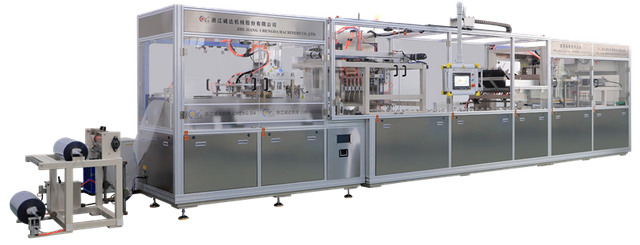
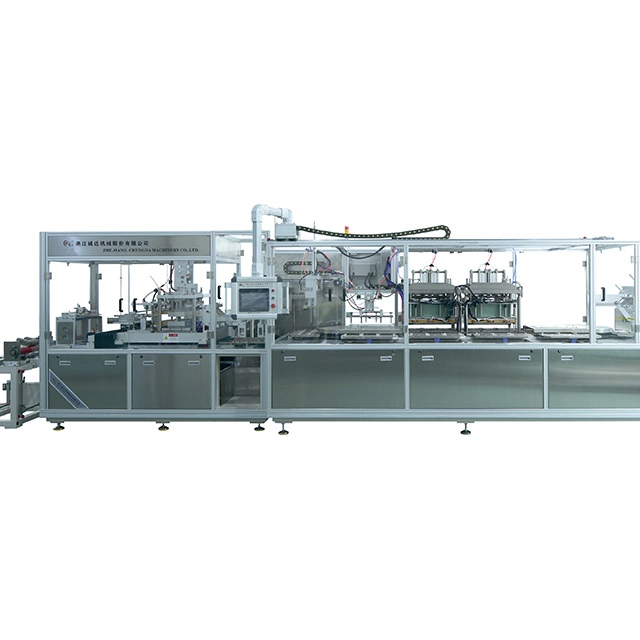
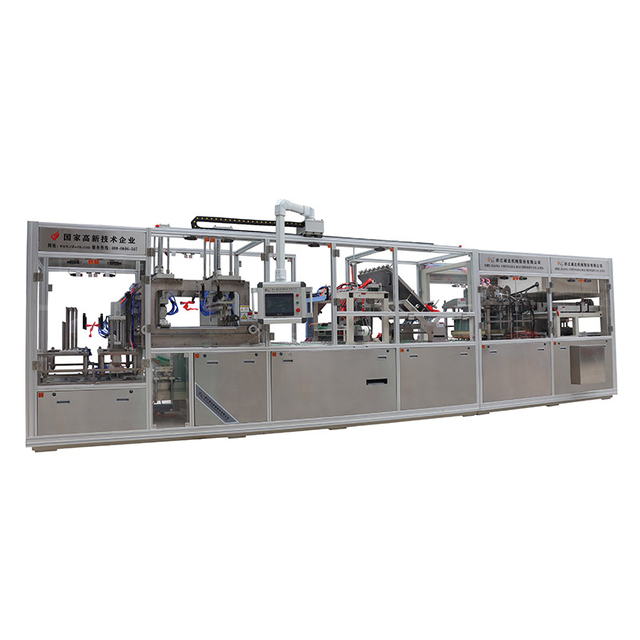
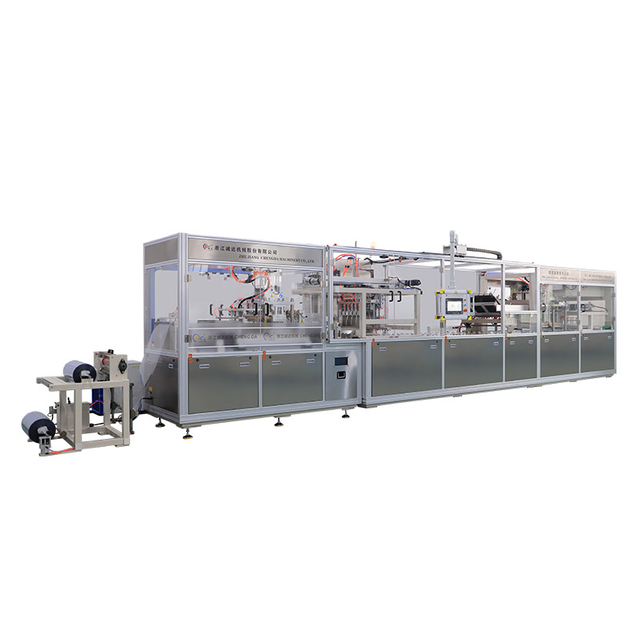
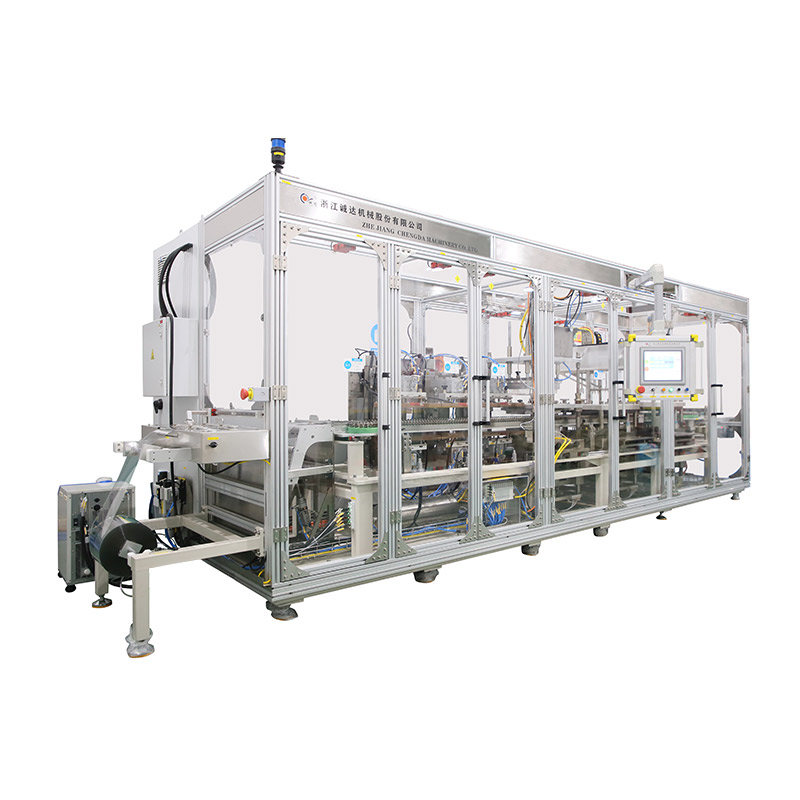
Chengda’s linear automatic blister packing machine includes a layout in which product loading may be manual or use a dedicated robotic arrangement.

Ask which feeding configuration is included in the quotation and what staffing assumptions support the proposed output.
A machine can help make forming and sealing operations more repeatable, but it does not guarantee acceptable packs without suitable materials, settings, tooling, and maintenance.
Likewise, a manual process can produce acceptable packaging when it uses appropriate equipment and controlled procedures.
Compare both options against the same requirements, such as:
Product position and completeness.
Cavity condition, where applicable.
Seal appearance and specified integrity.
Print and cutting alignment.
Finished dimensions.
Opening requirements.
Do not assume that automation alone provides sterility, extends shelf life, or establishes regulatory compliance.
A mainly manual process may remain suitable when:
Demand is uncertain or highly variable.
Product designs change frequently.
Batches are short relative to setup requirements.
Products require varied handling.
Existing output meets demand at an acceptable cost.
There is no universal batch size below which manual packaging is always cheaper.
Track the actual labor, quality, and capacity limits so that the decision can be reviewed as demand develops.
Evaluate a machine when there is a measurable reason to change the process, such as:
Repetitive handling consumes substantial labor.
Packaging limits delivery capacity.
Stable product formats support repeatable production.
Sustained demand can justify equipment utilization.
Trials demonstrate an acceptable process and cost.
Review Chengda’s blister machine range to compare the available equipment categories.
If blister forming is the only operation being considered for automation, a standalone blister forming machine represents a different project scope from a complete packing line. Include the remaining loading and sealing work in the comparison.
Run trials with representative products and proposed production materials.
Agree on the required pack quality, staffing, sustained output, material consumption, and changeover procedure.
Also confirm:
Included and optional equipment.
Utility and space requirements.
Tooling needed for each format.
Cleaning and maintenance access.
Training and spare-part requirements.
Downstream compatibility.
Use the trial results to update the cost model before approving the purchase.
Usually, people are still needed for some activities. The number depends on loading, replenishment, inspection, changeovers, and downstream handling.
There is no universal threshold. Evaluate labor cost, product mix, utilization, equipment investment, and acceptable output.
No. Low utilization, frequent changeovers, or additional operating costs can reduce the expected advantage.
Potentially, with suitable tooling and handling. Confirm feasibility through a product-specific review and trial rather than assuming all irregular shapes require manual packaging.
Provide product samples or drawings, package dimensions, materials, target output, shift pattern, product mix, and the current process you want to improve.
Considering a move from manual packing to machine-assisted blister packaging?
Contact Zhejiang Chengda Machinery with your current workflow, product details, packaging materials, and production target.
Ask for a proposed configuration with clear loading responsibilities and trial criteria so that you can compare costs and output on a consistent basis.