English
Views: 0 Author: Site Editor Publish Time: 2026-09-21 Origin: Site


High-mix, low-volume manufacturing dominates modern packaging floors. Personalized medicine, clinical trials, and targeted therapies force facilities to adapt rapidly. Legacy high-speed lines fail in these environments. They require massive changeover times, generate excessive material waste, and demand expensive custom tooling. Running a 5,000-unit batch on equipment built for continuous 500,000-unit runs destroys operational margins. The downtime alone wipes out profitability before the run even finishes. Facilities must procure a purpose-built Blister Machine optimized for agility. The right equipment balances strict regulatory compliance, tight cleanroom footprints, and viable unit economics for small batches. We need machinery that prioritizes rapid format changes over sheer throughput. Operators need intuitive controls, and maintenance teams need accessible parts. This approach ensures you maintain profitability on low-volume runs without sacrificing the stringent quality standards required in pharmaceutical and nutraceutical packaging.
Changeover Efficiency is Paramount: For small batches, a blister machine's value is dictated by format changeover speed rather than maximum cycles per minute (CPM).
Tooling Costs Dictate Margins: Custom packaging requires affordable, rapidly deployable format parts to maintain profitability on low-volume runs.
Compliance Cannot Scale Down: Even compact or semi-automatic blister machines must meet stringent cGMP and 21 CFR Part 11 requirements if operating in pharma or nutraceuticals.
Serialization and Sustainability are Non-Negotiable: Modern agile blister lines must integrate variable data printing for track-and-trace and possess the thermal precision to handle emerging eco-friendly mono-materials.
Footprint vs. Capability: Modern agile blister lines offer modularity, allowing facilities to integrate advanced inspection and printing within a constrained cleanroom footprint.
Table of Contents
For small-batch production, reducing changeover time is important for improving Overall Equipment Effectiveness (OEE). A long changeover has a greater impact on a 10,000-unit run than on a 100,000-unit run. For example, reducing three daily changeovers from two hours to 30 minutes can recover 4.5 hours of production time.
Facilities should monitor mean time to changeover (MTTC) as well as production speed. Quick-release tooling and servo-driven adjustments can reduce the time required to change forming dies, sealing plates, foil, and other format parts, helping improve equipment availability in high-mix production.
Production Metric | 10,000-Unit Custom Run | 100,000-Unit Commercial Run |
|---|---|---|
Active Production Time (at 50 units/min) | 3.3 Hours | 33.3 Hours |
Standard Changeover Time | 2.0 Hours | 2.0 Hours |
Total Floor Time Required | 5.3 Hours | 35.3 Hours |
Equipment Availability (OEE Factor) | 62% (Poor) | 94% (Excellent) |
Custom packaging requires dedicated forming, sealing, and cutting dies for every unique product profile. These tooling expenses accumulate rapidly in high-mix environments, often becoming the largest hidden cost of custom operations. You must evaluate the lifecycle of each product to determine the most cost-effective tooling strategy. CNC-machined aluminum tooling provides exceptional durability and thermal conductivity for long-term, recurring small batches. It withstands thousands of cycles without degrading. However, clinical trials, market testing, and R&D runs often require rapid deployment and lower upfront investment.
In these scenarios, 3D-printed or rapid-prototyped tooling offers a faster, more economical alternative. While rapid-prototyped parts may not survive years of continuous use, they perfectly serve the limited lifespan of a clinical trial phase. Balancing tooling longevity with upfront fabrication costs ensures that low-volume runs remain financially viable. To optimize tooling expenses across a high-mix facility, implement the following strategies:
Evaluate the projected lifecycle of the product before ordering permanent aluminum dies.
Standardize cavity layouts across multiple products to share the same cutting and perforation stations.
Utilize rapid prototyping for early-stage R&D to validate cavity geometry before committing to CNC machining.
Maintain an internal inventory of blank format plates to reduce vendor lead times on custom orders.
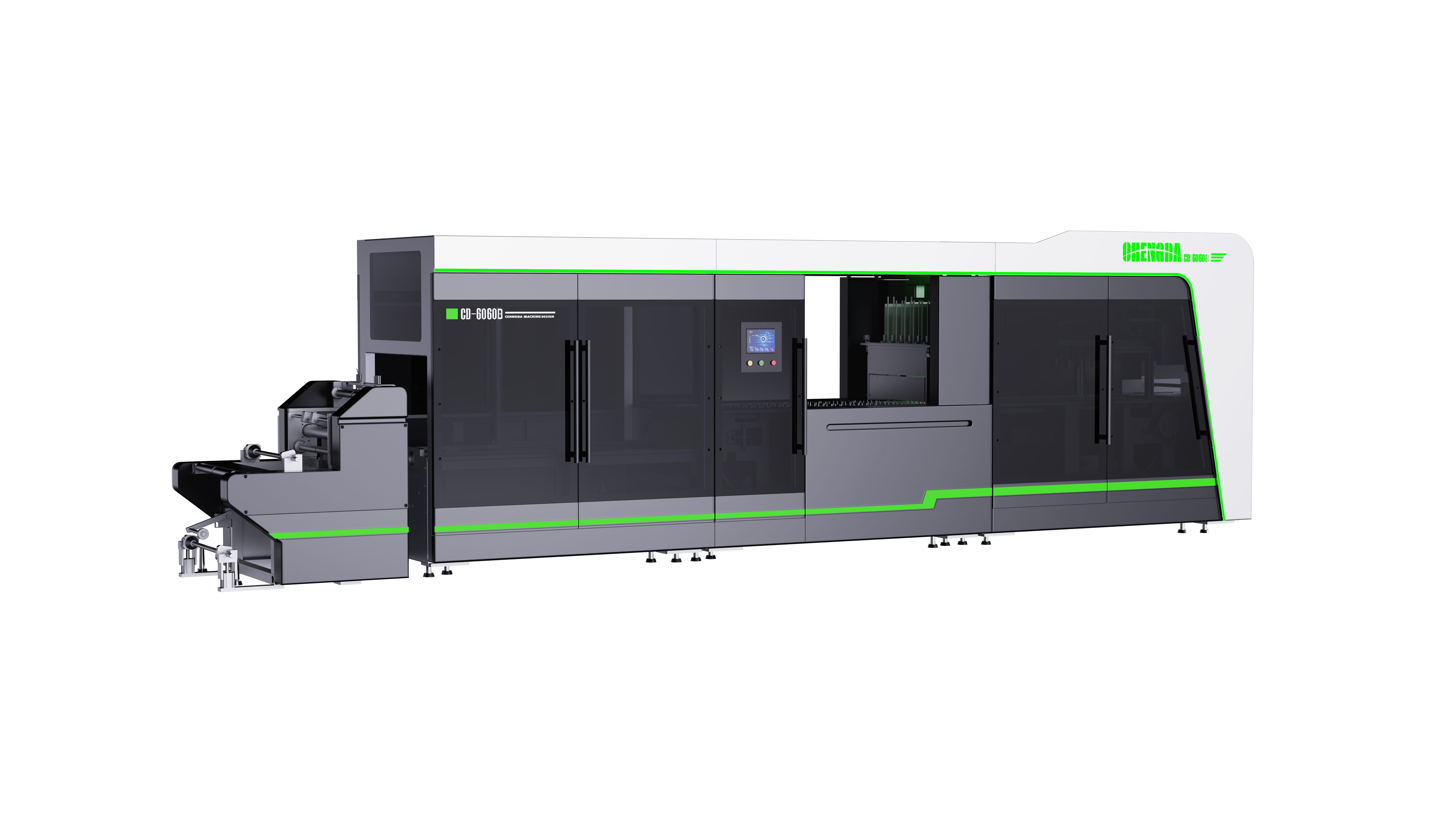
Platen sealing uses flat heated plates that remain stationary during sealing, providing longer dwell times and good compatibility with custom shapes and sensitive materials. Its flat tooling is also generally easier to manufacture and replace, making it suitable for small-batch and flexible production.
Rotary sealing uses heated rollers to seal the web continuously and is better suited for high-speed production. However, it requires more complex tooling and shorter dwell times. For operations focused on frequent product changes rather than maximum speed, platen sealing can provide greater flexibility.
Feature | Platen (Flat) Sealing | Rotary Sealing |
|---|---|---|
Best Application | Small batches, custom shapes, sensitive materials. | High-speed, large volume continuous production. |
Tooling Complexity | Simpler, flat dies. Easier and faster to manufacture. | Complex cylindrical dies. Requires high-precision machining. |
Dwell Time | Longer dwell time allows lower sealing temperatures. | Shorter dwell time requires higher temperatures or faster speeds. |
Changeover Speed | Generally faster due to slide-in flat plates. | Slower, requires careful alignment of heavy cylinders. |
Processing standard PVC or PVDC requires precise thermoforming capabilities. The plastic web passes through heating stations until pliable, then forming stations shape the cavities using compressed air, mechanical plugs, or a combination of both. Aluminum-Aluminum (cold forming) operates on a completely different physical principle. It relies entirely on mechanical stamping to stretch and shape the foil into cavities without any heat. Teflon-coated assist plugs physically push the cold foil into the die block. Cold forming provides an absolute barrier against moisture, light, and oxygen, making it mandatory for highly sensitive active pharmaceutical ingredients.
Contract manufacturing organizations often deploy a dual-capability Blister Machine to maximize material flexibility and expand their client base. Switching between thermoforming and cold forming on a single machine frame allows facilities to handle standard vitamins alongside highly sensitive pharmaceutical formulations. This dual capability prevents the need to purchase and maintain two separate pieces of equipment, optimizing floor space and capital utilization. The machine must feature interchangeable forming stations that can swap between heated air-pressure dies and heavy-duty mechanical stamping blocks.
Operational thresholds dictate the choice between semi-automatic and fully automatic compact lines. A semi-automatic setup relies on manual product feeding while automating the forming, sealing, and cutting phases. This approach minimizes upfront capital expenditure and proves highly effective for R&D, clinical trials, or ultra-low volume runs where product shapes vary wildly. Operators can visually inspect and manually place fragile or uniquely shaped items into the cavities. However, once production exceeds a specific unit threshold, labor costs outweigh the savings on equipment.
Fully automated compact lines integrate dedicated feeding systems, such as vibratory tracks, brush boxes, or robotic pick-and-place units. These automated systems require higher upfront investment and more complex changeovers, but they drastically reduce per-unit labor costs while maintaining strict consistency across larger batches. You must analyze your projected batch sizes, labor rates, and product fragility to determine the exact crossover point where automation becomes mandatory. Consider these factors when deciding to automate:
Batch Frequency: If you run the same product for more than two full shifts per week, automation yields a positive return.
Product Geometry: Standard round tablets feed easily through automated brush boxes, while complex medical devices require manual placement or expensive robotics.
Labor Availability: High turnover in manual packaging roles often forces facilities to automate earlier than financially projected.

Tool-less changeover features help reduce downtime in small-batch production. Quick-release pins, slide-in format parts, and pneumatic locking systems allow operators to replace tooling without specialized tools. Recipe-driven servo controls can also automatically adjust guide rails and indexing settings for different products.
Poka-yoke designs and interlock sensors help ensure tooling is installed correctly and reduce setup errors. These features support faster, safer changeovers when multiple product formats are produced on the same machine.
Blister machines should support materials such as Aclar, PETG, PVC, PP, and PET with accurate temperature control. Recyclable mono-materials like PP and PET are more sensitive to temperature changes, so multi-zone heating and PID control can help maintain stable forming and sealing quality.
Forming depth is also important for larger products such as medical devices and nutraceuticals. Compact machines may have limited draw depth, so the maximum forming depth should be checked against the size and shape of the products before selecting a machine.
Inline printing reduces the need to store multiple pre-printed foil rolls for different products. UV Drop-on-Demand (DOD) or thermal inkjet systems can print batch numbers, expiry dates, logos, and other variable information directly onto blank lidding foil before sealing.
For pharmaceutical traceability, the system can also print unique 2D codes for serialization. The printer should communicate with the machine PLC to match each code with the correct batch data. Missing or incorrect codes can then be detected, tracked, and automatically rejected during production.
Compact blister machines are suitable for cleanrooms where production space is limited. When handling HPAPIs, the equipment should support containment features such as negative pressure, HEPA filtration, and dust extraction to help control airborne particles and protect operators.
Modular machine designs also support future expansion. Facilities can start with forming and sealing equipment, then add vision inspection, cartoning, or other downstream systems as production needs grow. This helps reduce the need for major cleanroom layout changes.
Pharmaceutical blister machines should meet cGMP and FDA requirements, whether used for R&D or commercial production. Product-contact areas should use sanitary 316L stainless steel, smooth surfaces, and easy-to-clean designs to support cleaning validation.
The HMI and PLC should also support 21 CFR Part 11 requirements for electronic records and data integrity. Key functions include secure audit trails, controlled user access, electronic signatures, and time-stamped records of parameter, alarm, and recipe changes. These features help support equipment validation and reliable production records.
Vision inspection systems use cameras and software to detect missing, broken, or incorrect products during packaging. For high-mix production, the system should also support quick setup when switching to a new product. Modern systems can create new inspection profiles from sample products, reducing setup time. Defective cavities can then be automatically tracked and rejected before the finished package leaves the line.
R&D and clinical trial equipment should use similar forming and sealing processes as commercial production machines. Key parameters such as temperature, pressure, and sealing time should transfer easily when production scales up. Using compatible equipment helps simplify validation, reduce process adjustments, and support a smoother transition from small-batch testing to commercial production.
Request a Factory Acceptance Test (FAT) using your most difficult custom material to verify thermal control and forming accuracy before final sign-off.
Calculate tooling expenses for your top five SKUs to ensure custom format parts align with your operational budget and product lifecycles.
Initiate technical evaluations with vendors to confirm 21 CFR Part 11 compliance and verify how quickly vision inspection systems can be retrained.
Map your cleanroom footprint to ensure the selected equipment accommodates future modular upgrades for inline printing or cartoning integration.
A: In modern agile environments, the industry standard for format changeovers is between 15 and 30 minutes. Achieving this speed requires tool-less designs, quick-release pins, slide-in format parts, and recipe-driven servo adjustments that eliminate manual mechanical tuning and wrench work.
A: Yes, dual-capability machines process both thermoformed plastics and cold-formed Alu-Alu materials. Thermoforming uses heat and compressed air to shape plastics like PVC, while cold forming requires specialized mechanical stamping dies to form aluminum cavities without heat.
A: Tooling costs depend on the complexity of the cavity shape, the number of cavities per index, and the manufacturing method. CNC-machined aluminum dies require higher upfront investment but offer long-term durability, whereas 3D-printed rapid prototyping provides an economical alternative for short clinical runs.
A: Semi-automatic machines are ideal for ultra-low volumes, clinical trials, and R&D runs where manual product feeding is manageable. Once batch sizes consistently require dedicated operators feeding product for full shifts, upgrading to a fully automated compact line becomes necessary to reduce labor overhead.
A: Yes, purpose-built pharmaceutical models fully comply with cGMP guidelines. They feature sanitary stainless steel designs and integrate advanced PLC/HMI controls that meet 21 CFR Part 11 requirements, ensuring complete data integrity, electronic signatures, and secure audit trails.
A: Processing recyclable mono-materials like PP or PET requires highly precise thermal control. Unlike standard PVC, which has a wide heating window, sustainable materials will warp or fail to seal if temperatures fluctuate. Modern compact machines utilize advanced multi-zone heating to manage these sensitive eco-friendly films.