English
Views: 0 Author: Site Editor Publish Time: 2026-09-21 Origin: Site


In medical device manufacturing, packaging functions as a critical component of the product itself rather than just a simple container. A single sterile barrier breach during transit or storage easily leads to catastrophic product recalls and severe patient risks. Manufacturers must balance the rigorous demands of FDA and ISO regulatory compliance with the operational need for production efficiency, scalability, and minimal downtime during product changeovers. Selecting the right equipment bridges the gap between strict compliance and high throughput. This guide provides a technical framework for evaluating packaging equipment based on material compatibility, validation requirements, and workflow alignment. We will examine how specific forming technologies impact barrier properties and why robust validation documentation accelerates your deployment timeline.
Compliance is the Baseline: Machine specifications must inherently support ISO 11607 standards for terminally sterilized medical devices and FDA 21 CFR Part 11 for electronic records.
Technology Dictates Capability: The choice between thermoforming, cold forming, and pre-formed tray sealing directly impacts barrier properties, material costs, and tooling complexity.
Flexibility vs. Throughput: Low-volume, high-mix facilities require modular, quick-changeover systems, whereas high-volume consumable production demands continuous-motion rotary systems.
Validation Defines ROI: A blister machine’s true value includes the manufacturer’s ability to provide robust IQ/OQ/PQ documentation to accelerate the validation timeline.
Table of Contents
Medical device packaging must protect the product, maintain the sterile barrier, and support efficient production. The right blister machine should match the device type, packaging material, production volume, cleanroom requirements, and validation needs.
This guide explains the main blister machine technologies, selection factors, compliance requirements, and common production risks.
Before selecting a machine, define the basic packaging and production requirements.
Seal quality depends on accurate control of temperature, pressure, and sealing time. Stable process parameters help maintain package integrity during storage, transportation, and sterilization.
The blister cavity should match the shape and size of the medical device. Proper cavity depth, wall thickness, and material distribution help reduce movement and damage during transportation.
Medical packaging should be easy for healthcare professionals to identify and open. Seal strength should maintain package integrity while allowing smooth peeling without excessive tearing.
Packaging lines can integrate printers and vision systems for UDI codes, lot numbers, expiration dates, and barcode verification. Incorrect or unreadable packages can then be automatically rejected.
Different packaging technologies are suitable for different devices, materials, and production volumes.

Thermoforming heats plastic films such as PVC, PETG, or APET before forming them into cavities.
It is suitable for:
Transparent medical packaging
Syringes and small devices
Products requiring visual inspection
Medium- to high-volume production
Cold forming uses mechanical pressure to shape aluminum laminates without heating the forming web.
It provides high protection against moisture, oxygen, and light but produces an opaque package.
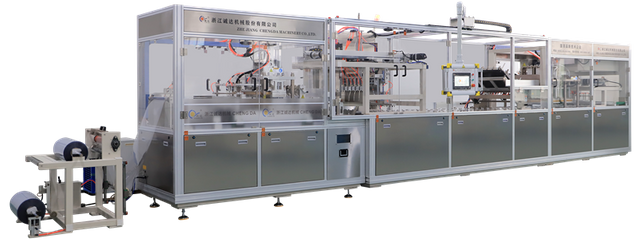
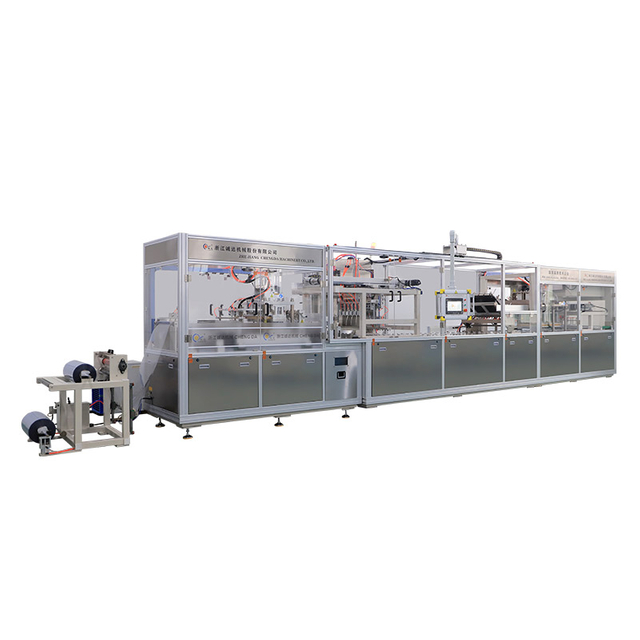
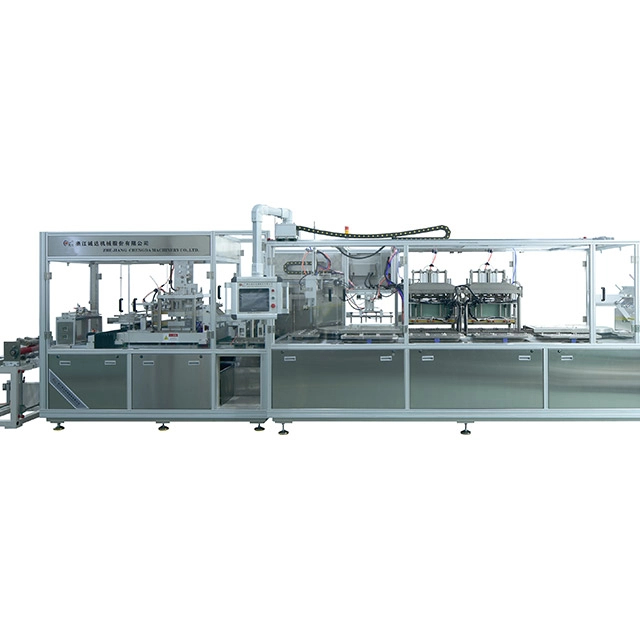
Form-Fill-Seal (FFS) machines combine forming, product loading, sealing, printing, and cutting in one production line.
They are suitable for high-volume medical device manufacturing.
Tray sealers use ready-made rigid trays instead of forming cavities from roll stock.
They are often suitable for large, complex, or lower-volume medical devices.
The sealing system affects production speed, material compatibility, and seal performance.
Rotary systems use heated rollers while the packaging web moves continuously.
They are suitable for:
High-speed production
Standard flexible films
Simple sealing patterns
High-volume medical consumables
Flat-plate systems stop the web while heated plates apply pressure.
They provide longer sealing time and greater flexibility for:
Tyvek packaging
Heavy-gauge materials
Rigid medical trays
Complex seal shapes
Machine selection should consider more than production speed.
Match machine output with expected daily production and batch size.
High-volume products may benefit from continuous-motion equipment, while high-mix production often requires more flexible machines.
Check whether the machine can process your intended materials, including:
PVC
PETG
APET
Tyvek
Aluminum laminates
Recyclable mono-materials
Large or irregular devices may require deeper cavities and plug-assist forming.
Stable heating and forming pressure help maintain consistent cavity wall thickness.
Medical packaging machines should be designed for easy cleaning and controlled production environments.
Common features include:
Stainless steel construction
Smooth and accessible surfaces
Enclosed forming areas
Dust extraction
Controlled pneumatic exhaust
Robotic pick-and-place systems can position medical devices directly into formed cavities.
Automation is especially useful for high-volume production or products requiring accurate positioning.
Inline cameras can inspect:
Missing products
Incorrect positioning
Seal-area contamination
Printed codes
Barcode quality
Defective packages can be automatically rejected before downstream packaging.
Medical device manufacturers often produce multiple products on the same packaging line.
Quick-release tooling helps reduce machine downtime between different product formats.
Machine recipes can store settings such as temperature, pressure, web tension, and guide positions.
Operators can select the required product through the HMI instead of adjusting each parameter manually.
Tooling can be designed so that components fit only in the correct position, helping reduce setup errors.
Medical device manufacturers are increasingly evaluating recyclable packaging materials.
Materials such as mono-PET can improve recyclability but often require more accurate heating and cooling control.
Web tracking and optimized cavity layouts can reduce edge trim and unused material between packages.
Before changing packaging materials, manufacturers should test forming, sealing, and cutting performance under actual production conditions.
Compliance and validation should be considered during machine selection rather than after installation.
ISO 11607 addresses packaging requirements for terminally sterilized medical devices.
Packaging equipment should provide stable and repeatable control of critical sealing parameters.
For electronic records, suitable machine software can provide:
User access control
Audit trails
Electronic records
Parameter change history
Electronic signatures
Factory Acceptance Testing (FAT) checks machine functions before shipment.
Site Acceptance Testing (SAT) verifies installation and operation after the machine reaches the production facility.
IQ – Installation Qualification
Confirms that the equipment is installed correctly.
OQ – Operational Qualification
Confirms that the machine operates within defined process limits.
PQ – Performance Qualification
Confirms stable production using actual products and packaging materials.
The fastest machine is not always the most suitable machine.
Dedicated lines support stable, high-volume production of one product.
Flexible machines support multiple device formats but require regular changeovers.
Servo systems provide accurate and repeatable motion control.
Pneumatic systems may be simpler but require a stable compressed-air supply and regular maintenance.
Standard tooling can reduce initial setup time.
Custom tooling can better match unusual device shapes and may improve product protection and material use.
Possible causes:
Incorrect temperature
Uneven sealing pressure
Contamination in the seal area
Incorrect material settings
Recommended approach:
Monitor critical sealing parameters and inspect sealing tools regularly.
Incomplete machine documentation can delay qualification.
Select equipment suppliers that can provide FAT, SAT, IQ, OQ, and PQ documentation.
Incorrect device placement can interfere with sealing.
Robotic feeding and vision inspection can help identify and reject incorrectly positioned products.
Dust, cutting particles, and exposed machine components can affect clean production.
Enclosed packaging areas, dust extraction, and easy-to-clean machine surfaces help reduce contamination risks.
Complex tooling can increase downtime between production batches.
Tool-less parts, recipe management, and quick-release mechanisms can simplify format changes.
The right blister machine should match your medical device, packaging material, production volume, cleanroom requirements, and validation process.
Before selecting equipment, define:
Device dimensions and shape
Packaging materials
Sterile barrier requirements
Daily production capacity
Required automation level
Cleanroom requirements
UDI and inspection requirements
Validation documentation
Testing actual products and packaging materials during machine trials can help confirm forming, sealing, feeding, and inspection performance before production.
Thermoforming uses heat to form plastic films such as PETG or PVC. Cold forming uses mechanical pressure to form aluminum laminates and provides higher barrier protection.
FFS systems are generally suitable for higher-volume production where forming, loading, sealing, printing, and cutting need to be integrated into one line.
Typical features include stainless steel construction, easy-to-clean surfaces, enclosed processing areas, dust extraction, and controlled exhaust systems.
Modular machines can support multiple products by changing forming, sealing, and cutting tools and selecting the appropriate machine recipe.
Depen