English
Views: 0 Author: Site Editor Publish Time: 2026-11-02 Origin: Site


A blister machine is usually the more relevant choice when a product needs a formed cavity, controlled positioning, or visible retail presentation. A strip packing machine is worth evaluating when suitable individual products need to be enclosed between two sealable material webs.
Neither machine is better for every application. The right choice depends on the product, finished package, material requirements, and production process.
The most useful comparison starts with the pack you need to make—not the machine’s advertised speed.
Table of Contents
Blister packaging uses a formed cavity to hold the product. A suitable lid, backing card, or other specified material closes the pack.
Strip packaging encloses the product between two sealable webs. The materials are sealed around the product and cut into the required strip or pack format.
In this article, “strip packing machine” refers to equipment for individually enclosed solid products such as tablets and capsules. It does not refer to stick-pack equipment for powders or liquids.
Selection factor | Blister machine | Strip packing machine |
|---|---|---|
Basic structure | Formed cavity with a lid or backing | Product enclosed between two sealable webs |
Main process distinction | Cavity forming before loading | Sealing around the product without the same separate preformed-cavity process |
Product visibility | Available with transparent forming materials | Depends on the web structure |
Product positioning | Defined partly by cavity geometry | Depends on feeding and sealing-tool geometry |
Typical evaluation | Pharmaceutical unit packs or shaped retail packs | Suitable individual solid products |
Barrier performance | Material- and process-dependent | Material- and process-dependent |
Output and cost | Configuration-specific | Configuration-specific |
The process depends on the packaging format and machine configuration.
A forming-and-sealing line may include material unwinding, cavity forming, product loading, sealing, cutting, and discharge. A standalone forming machine performs only part of this workflow.
Pharmaceutical blister equipment forms pockets, loads products, and seals them with a lidding material.
Depending on the equipment and material system, forming may use heat or a cold-forming process. Blisters can therefore be transparent or opaque.
Do not assume that every blister machine can process every pharmaceutical material or dosage format.
Retail blister packaging can combine a shaped cavity with a backing card or another specified closure.
This format is relevant when buyers need to see the product or when the package must present several components in a defined arrangement.
Products to evaluate include toothbrushes, batteries, hardware, and personal care items. The proposed equipment must match the product dimensions, loading method, and package design.
Explore Chengda’s blister machine range to review the available equipment categories.

A strip packing machine feeds suitable products between two compatible packaging webs. The machine seals around the products, then cuts or perforates the material into the specified format.
The exact sequence and tooling depend on the equipment.
Material options can include foil laminates or other heat-sealable structures supported by the machine. The term “strip packaging” does not establish one universal material specification.
Before choosing this process, assess:
Product dimensions and consistency.
Feeding and separation behavior.
Fragility and surface characteristics.
Required seal area.
Opening and pack-separation requirements.
Perforations can help users separate units, but their position must preserve the required seal.
A blister format is worth evaluating when a shaped cavity helps locate the product or organize multiple components.
For retail packs, a transparent cavity can also provide visibility.
However, a cavity does not automatically make the finished package crush-resistant. Protection depends on material thickness, cavity shape, product fit, backing, and the complete shipping arrangement.
Strip packaging can be evaluated when individual products can be fed consistently and sealed between the selected webs.
Blister packaging may also be suitable for those products. The decision should follow package requirements and trial results rather than the product name alone.
For a shaped consumer item or a kit displayed on a card, retail blister equipment is generally the more relevant starting point.
A pharmaceutical strip machine is not a direct substitute for a retail card-blister line.
Define the finished pack before requesting quotations so that suppliers propose comparable solutions.
Neither format automatically wins.
Opaque foil structures can provide light protection, while transparent structures allow product visibility. Blister packaging can use opaque materials too.
Moisture and oxygen protection depend on the selected material system and the quality of the finished pack.
Compare:
Material composition and thickness.
Relevant transmission data.
Forming effects on the material, where applicable.
Seal design and integrity.
Performance after handling and distribution.
Product-specific storage and stability requirements.
Do not assume that an aluminum lid protects the entire pack from light if another part of the package is transparent.
Also avoid treating an ordinary sealed blister as a validated sterile barrier. That requires a separately defined packaging system and supporting evidence.
There is no universal speed ranking.
Output depends on the product, feeding system, number of lanes or cavities, sealing process, cutting layout, and downstream equipment.
A blister machine may report cycles per minute, while another quotation reports packs or products per minute. These figures cannot be compared directly.
For example, a line running 20 cycles per minute with four finished packs per cycle has a theoretical output of 80 packs per minute. This is a calculation example, not a Chengda machine specification.
Compare equipment using:
The same product and pack format.
Acceptable finished packs per minute.
Agreed trial duration.
Recorded rejects and interruptions.
Required downstream operations.
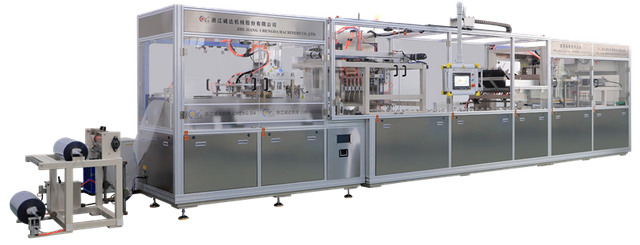
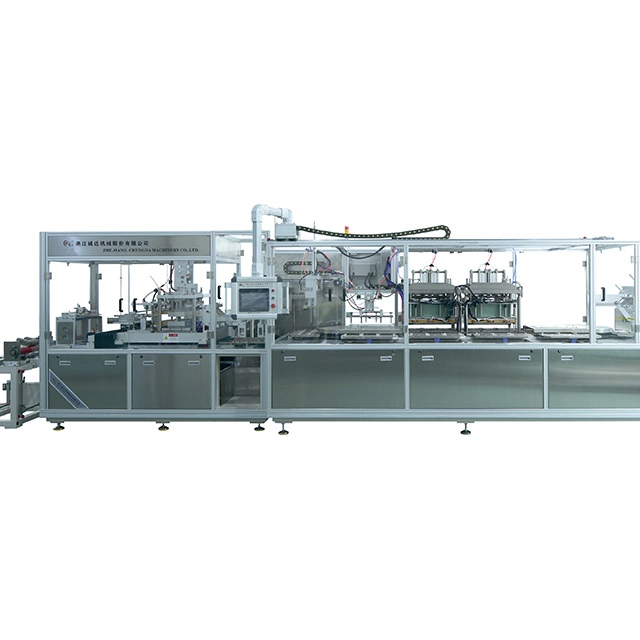
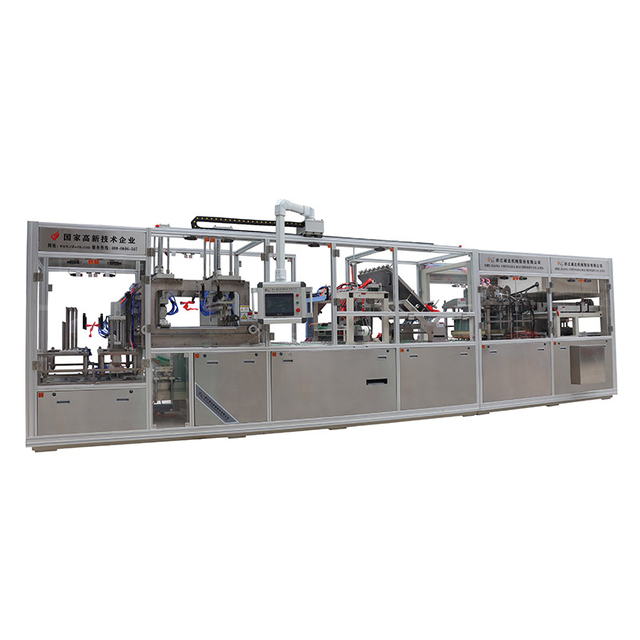
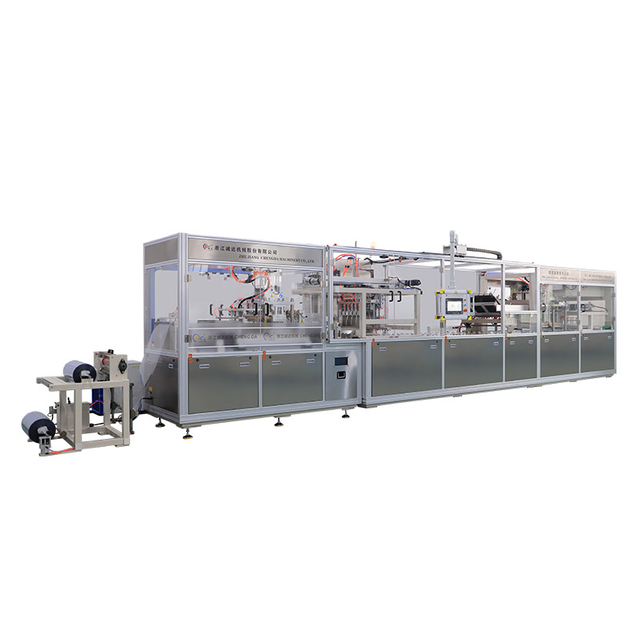
Chengda’s linear automatic blister packing machine provides one configuration to review for forming, loading, cutting, and sealing. Confirm the proposed feeding arrangement and output for your product.
Compare the cost per acceptable finished pack rather than purchase price alone.
Cost area | What to include |
|---|---|
Materials | Webs, backing, coatings, and material consumed per pack |
Tooling | Forming, sealing, cutting, and feeding parts |
Operation | Labor, utilities, and inspection |
Losses | Startup material, rejected packs, and damaged products |
Changeovers | Replacement parts, adjustment, cleaning, and downtime |
Maintenance | Service requirements and spare parts |
Downstream packaging | Stacking, cartoning, and case packing |
Strip packaging does not always consume less material. Seal margins, product spacing, web layout, and cutting design affect consumption.
Blister packaging does not always require a higher total investment either. Compare quotations with the same automation scope and packaging requirements.
For projects that need cavities produced as a separate operation, review Chengda’s automatic blister forming machine. Confirm which additional processes are needed to complete the package.
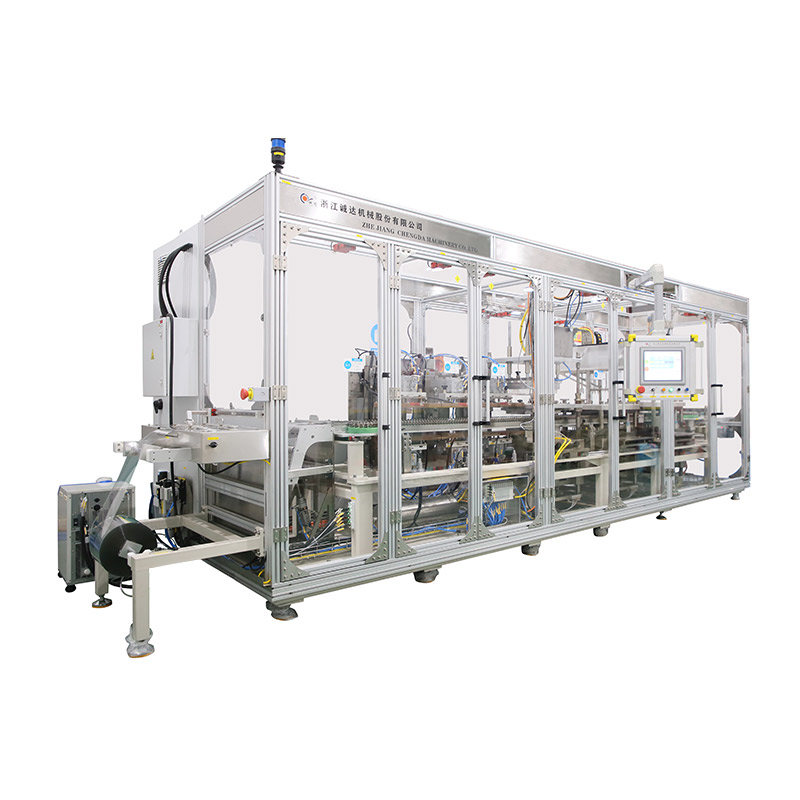
Use representative product samples and the proposed production materials.
Check orientation, loading consistency, damage, and the frequency of feeding stops.
Inspect dimensions, product position, seal areas, printing alignment, cutting, and opening behavior.
Where forming is involved, check cavity shape and material condition.
Record acceptable output over an agreed run. Include stoppages and rejected packs rather than reporting only the highest short-term speed.
Identify which parts must change, which settings need adjustment, and what cleaning is required.
Confirm that the finished packs can be discharged, stacked, cartoned, or otherwise handled by the proposed production line.
Set acceptance criteria before the trial so that both buyer and supplier assess the same result.
Start with blister packaging when the project requires a formed cavity, visible retail presentation, or a defined arrangement for shaped products.
Evaluate strip packaging when suitable individual solids need a sealed-web format and the product can be handled reliably by the proposed feeding system.
If both formats are technically suitable, compare:
Product protection and opening requirements.
Actual material structures.
Trial quality and sustained output.
Changeover and maintenance needs.
Total cost per acceptable pack.
Market preferences can inform the decision, but avoid choosing from broad assumptions about a country or region. Confirm the requirements of the actual buyer, distributor, and target application.
No. An aluminum-aluminum blister uses a formed cavity web and a lidding web. Strip packaging encloses the product between sealable webs without the same separate preformed-cavity process.
Do not assume so. Their forming, feeding, and sealing arrangements differ. Request confirmation for the exact formats and materials proposed.
Compare the complete material system, seal integrity, and product requirements. The format name alone does not establish protection or shelf life.
No. Transparency depends on the material structure. Some blister packs use opaque forming materials.
Provide product samples or drawings, finished-pack dimensions, proposed materials, products per pack, target output, changeover needs, and downstream requirements.
If your product needs a formed blister or retail display pack, contact Zhejiang Chengda Machinery with your product details, packaging concept, materials, and production target.
Request a review of the proposed forming, loading, sealing, and cutting operations. Confirm the configuration and trial criteria before comparing equipment quotations.
Request a Quote