English
Views: 0 Author: Site Editor Publish Time: 2026-11-11 Origin: Site


A China-made blister machine may offer a suitable configuration and competitive quotation for a packaging project. Equipment manufactured elsewhere may also meet the same requirements. Neither price nor quality can be established from country of origin alone.
There is also a terminology issue: for a buyer outside China, a China-made machine is itself imported equipment.
In this comparison, “imported” refers to equipment from other manufacturing countries commonly considered alongside Chinese suppliers. The useful purchasing question is which specific proposal delivers the required package quality, output, and support at an acceptable total cost.
Table of Contents
A low-price quotation is not necessarily a lower-cost solution if it excludes functions included in another offer.
Before comparing suppliers, issue the same packaging specification to each one.
Include:
Product samples or dimensioned drawings.
Finished-pack dimensions and layout.
Proposed forming and backing materials.
Required acceptable output.
Product-loading responsibilities.
Inspection and rejection requirements.
Changeover formats.
Downstream equipment interfaces.
Installation and documentation requirements.
Also confirm the equipment category. A retail card-blister machine, a pharmaceutical blister line, and a standalone forming machine are different purchasing scopes.
Explore Chengda’s blister machine range to identify the equipment category relevant to your project before requesting a configuration.
The machine price is only one part of the investment.
Use a consistent cost checklist for every proposal.
Cost category | What to confirm |
|---|---|
Machine scope | Included stations, controls, guarding, and accessories |
Product handling | Feeders, loading systems, fixtures, and discharge |
Format parts | Tooling included for each product and package |
Transport | Export packing, freight, insurance, and inland delivery |
Import costs | Destination-specific duties, taxes, and clearance charges |
Installation | Utilities, site preparation, commissioning, and travel |
Training | Operator and maintenance training scope |
Startup support | Trial materials, spare parts, and acceptance activities |
Check the quotation’s delivery terms and named location so that responsibilities are clear.
Do not apply a generic import-tax percentage or assume that a supplier’s local selling price represents the cost delivered to your factory.
Recoverable taxes and nonrecoverable expenses should also be treated consistently in the purchasing comparison.
The most useful quality evidence is the machine’s performance with your product and proposed materials.
Check cavity condition, product position, seal quality, cutting alignment, and finished dimensions against agreed criteria.
A polished frame or a familiar component brand does not prove that the machine can produce your required pack consistently.
Ask which dimension or process is being measured.
Tooling accuracy, web-positioning repeatability, cutting registration, and finished-pack dimensions are different characteristics.
Avoid comparing unsupported figures such as “±0.01 mm” unless both suppliers identify the measurement, method, conditions, and acceptance limits.
Request material information for the parts where it matters to the application.
Distinguish the structural frame, product-contact surfaces, tooling, guards, and electrical enclosure. A general statement that a machine is “stainless steel” does not describe every component.
Confirm surface finish, cleaning access, and material suitability where required by the packaging process.
A component list is useful, but the machine’s performance also depends on integration.
Review recipes, alarms, access levels, parameter control, backup procedures, and the functions included in the quotation.
If particular component brands or models are required, specify them in writing and agree on how substitutions will be handled.
Machine specifications may use cycles, products, cards, or finished packs per minute.
Convert proposals to the same output basis before comparing them.
Then assess sustained acceptable output with representative materials, the agreed staffing level, and the required inspection functions operating.
Record:
Acceptable finished packs.
Rejected packs and damaged products.
Loading interruptions.
Material replenishment.
Unplanned stops.
Downstream constraints.
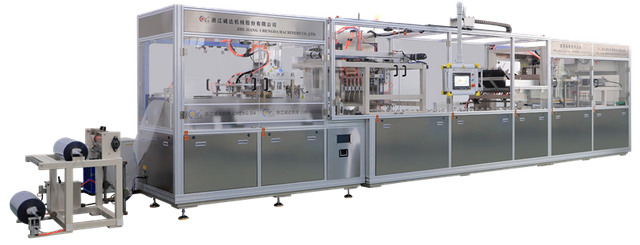
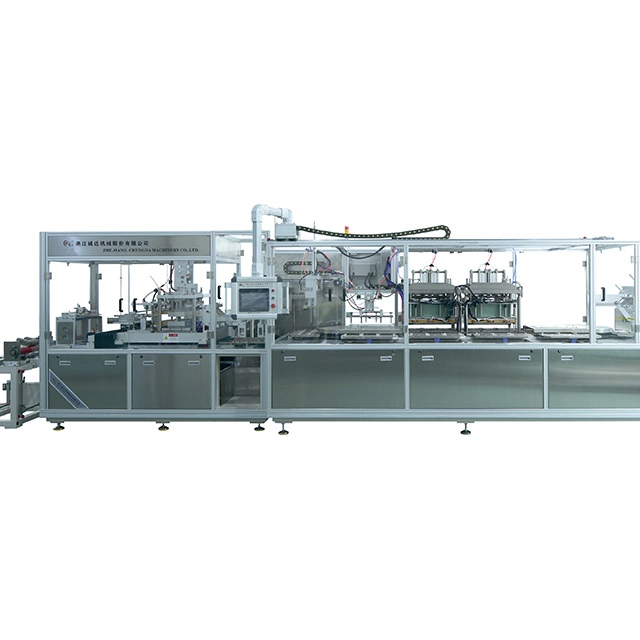
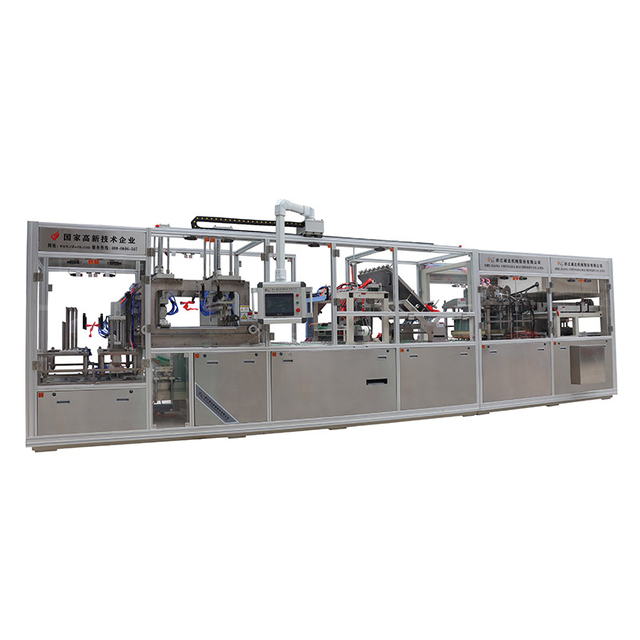
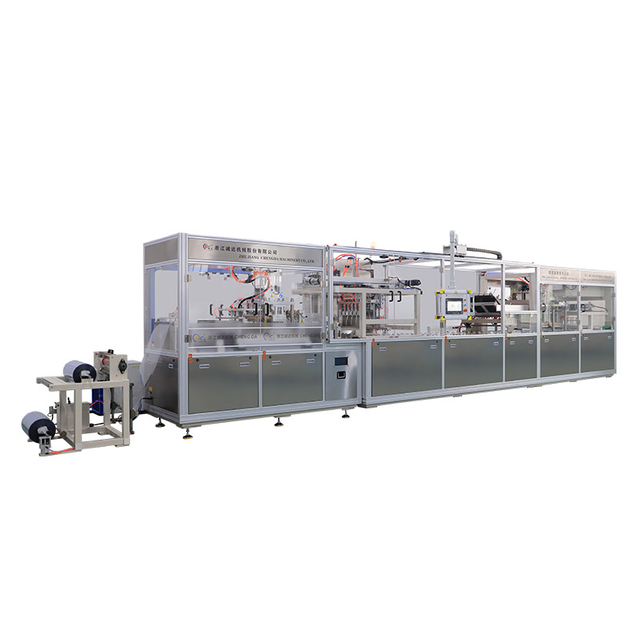
Chengda’s linear automatic blister packing machine is one configuration to evaluate for a blister project. Confirm the proposed loading arrangement rather than assuming that automatic forming and sealing eliminate all manual work.
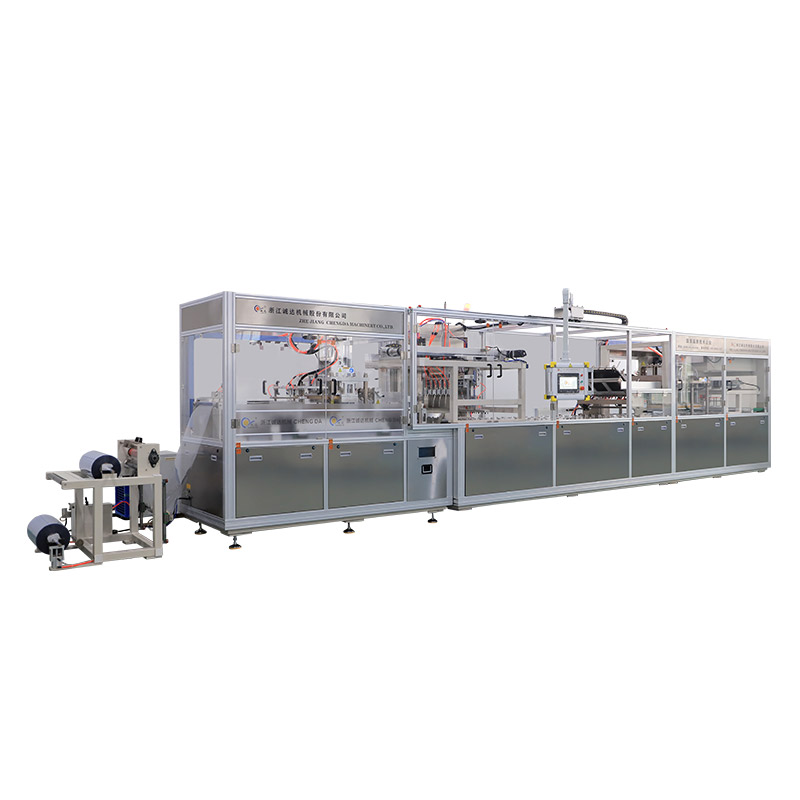
Country of manufacture does not establish the output of a specific configuration.
A machine with a lower purchase price may become expensive if it requires more labor or downtime for your product mix. A higher-price machine may also be difficult to justify if its additional functions are rarely used.
Compare operating costs using your expected production schedule.
Include labor, utilities, maintenance, tooling, startup material, rejects, and changeovers.
Define changeover time consistently: from the last acceptable pack of one format to the first acceptable pack of the next.
For each changeover, identify:
Parts that need replacement.
Adjustment and alignment work.
Cleaning and inspection.
Startup material consumption.
Required operator skills.
Do not assume that equipment from one country always changes faster or uses less material.
Geographic distance matters, but it does not tell the whole service story.
A supplier may support customers through direct factory service, a distributor, a regional partner, or remote assistance. Confirm which arrangement applies at your installation location.
Ask for written clarification of:
Support hours and time zone.
Initial response arrangements.
Remote-support capabilities and requirements.
On-site assistance availability.
Travel and service charges.
Recommended spare parts.
Availability of proprietary components.
Warranty coverage and exclusions.
Distinguish a response commitment from a repair-time commitment. Diagnosing a fault does not guarantee immediate resolution.
For overseas purchases, shipping parts internationally may affect repair time regardless of the machine’s manufacturing country.
A production-ready date can include engineering, tooling, component procurement, assembly, trials, shipping, installation, and site acceptance.
Request a project schedule with clear milestones.
Also confirm what the buyer must supply, such as approved artwork, product samples, packaging materials, utilities, or downstream interface information.
Late approvals or unsuitable trial materials can affect either supplier.
Compare the expected date of accepted production, not just the date the machine leaves the factory.
Define documentation requirements before ordering.
Depending on the project, these may include operating instructions, electrical drawings, maintenance information, spare-parts lists, safety documentation, and records supporting equipment qualification.
A quality-management certificate does not establish the performance of an individual machine.
Likewise, a general “compliant” statement should not replace documents relevant to the exact equipment, intended use, and destination requirements.
Ask the supplier to identify what is included and what remains the buyer’s responsibility. Do not infer pharmaceutical suitability or validated packaging performance from the country of origin.
Agree on acceptance criteria before the machine is built.
A factory acceptance test can assess the agreed configuration before shipment. A site acceptance test can assess installation and operation at the buyer’s facility.
Define:
Products and materials used.
Trial duration.
Acceptable output and quality.
Staffing and automation scope.
Changeover demonstration.
Required safety-function checks.
Documents to be delivered.
How outstanding issues will be resolved.
A demonstration video is useful for understanding the process, but it does not replace evidence against agreed acceptance criteria.

Choose the proposal that meets your requirements with evidence and a clear commercial scope.
A China-made blister machine is worth considering when the supplier demonstrates the required packaging result and provides acceptable terms for implementation, parts, and support.
The same evaluation applies to equipment manufactured elsewhere.
If two proposals meet the technical requirements, compare total ownership cost using the same period, production volume, and assumptions.
Keep uncertain costs visible. Where future downtime or maintenance cannot be established reliably, compare several scenarios instead of presenting one estimate as fact.
No universal discount applies. Compare equivalent configurations and total delivered costs using actual quotations.
No. Component selection matters, but engineering, integration, tooling, assembly, and process performance also need evaluation.
Potentially, but suitability must be established for the exact equipment and application. Manufacturing origin alone proves neither suitability nor unsuitability.
Check the parts list, stock location, proprietary items, and delivery arrangements for your factory. Do not assume an answer from nationality.
A clear specification, a complete quotation, relevant drawings, product-specific trials, and agreed acceptance criteria provide a stronger basis than general quality claims.
Comparing blister machine suppliers for your next project?
Contact Zhejiang Chengda Machinery with your product details, packaging materials, target output, destination, and documentation requirements.
Request a proposal that identifies the included operations, loading responsibilities, tooling, and acceptance criteria so that you can compare offers on the same basis.
Request a Quote