English
Views: 0 Author: Site Editor Publish Time: 2026-11-16 Origin: Site


A flat blister machine is not automatically more precise, and a rotary blister machine is not automatically faster. The first step is to establish what each supplier means by “flat” and “rotary.”
These terms can describe different parts of a machine. Flat or platen sealing may refer to the sealing mechanism, while rotary may refer to roller sealing or a rotating workstation arrangement.
For buyers, the better comparison is between specific configurations producing the same finished package.
Table of Contents
Platen sealing uses opposing sealing surfaces that close on a defined area of the package.
The supplier should explain the contact time, pressure control, temperature control, and material requirements for the proposed configuration.
A flat sealing surface does not, by itself, describe the machine’s forming process, transport layout, or complete automation scope.
Roller sealing uses rotating sealing tools to apply the seal as material passes through the station.
This is a sealing principle. It should not be confused with every machine marketed as a “rotary blister machine.”
In a rotary workstation arrangement, tooling or carriers move through stations around a rotating table.
The machine may include separate forming and cutting operations before the blister enters the loading and sealing arrangement.
Therefore, a rotary workstation machine should not automatically be described as forming cavities between engraved rollers.
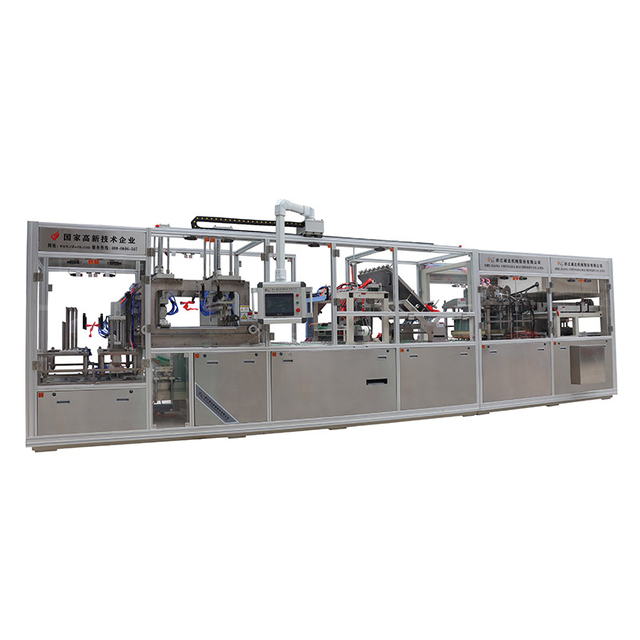
A linear layout moves materials or carriers along a generally straight production path.
“Linear” describes the layout rather than proving that every processing station uses a particular forming or sealing mechanism.
Before comparing quotations, ask suppliers to identify the forming method, sealing method, transport arrangement, and loading process separately.
Evaluation area | What to verify in a flat or platen-based proposal | What to verify in a rotary proposal |
|---|---|---|
Meaning of the name | Which station uses flat tooling? | Does rotary mean roller sealing or a rotating workstation? |
Forming capability | Material, cavity geometry, and forming process | The actual forming station, rather than assumptions from the rotary label |
Seal quality | Temperature, pressure, contact time, and tooling | The corresponding controls for the proposed sealing mechanism |
Output | Accepted finished packs over an agreed run | The same output basis and trial conditions |
Loading | Manual or automatic tasks and available access | Loading time, station access, and transfer requirements |
Changeover | Parts, settings, cleaning, and restart checks | The same scope, including carriers or rotary tooling where applicable |
Cost | Complete configuration and tooling | Equivalent automation scope and tooling |
Neither column establishes a universal winner. The results depend on the proposed machine and packaging task.
Forming capability depends on the actual forming station, material, tooling, and cavity geometry.
Do not apply a universal depth limit to all rotary machines or assume that every flat machine can process cold-form aluminum.
For each proposal, confirm:
Approved material structures and thicknesses.
Product dimensions and cavity layout.
Required cavity depth.
Forming method and tooling.
Material condition after forming.
Seal compatibility with the selected backing.
A published maximum forming depth is a selection limit, not proof that every cavity shape will perform equally well at that depth.
Request trials with the intended material and representative product geometry.
Sealing quality should be evaluated against agreed package requirements.
Relevant checks may include seal continuity, appearance, opening behavior, and integrity testing appropriate to the package.
Ask how the machine controls temperature, pressure, and contact time. Where process conditions depend on speed, confirm how the relationship is managed.
A machine should maintain acceptable packs within its agreed operating window. Neither a platen nor a roller makes the process automatically acceptable.
Also distinguish retail card-blister sealing from pharmaceutical lidding. Materials, tooling, and acceptance criteria can differ.
A rotary machine may offer advantages for a particular production task, but its name alone does not establish higher output.
Compare the complete production process, including feeding, loading, backing placement, sealing, discharge, and downstream handling.
Use a consistent output unit. Cycles per minute, products per minute, and finished packs per minute are different measures.
During a trial, record:
Acceptable finished packs.
Elapsed production time.
Staffing and loading responsibilities.
Rejects and rework.
Material replenishment and stops.
Downstream limitations.
For mixed-product production, include setup and changeover time in the scheduling comparison.
Do not compare a supplier’s maximum short-run speed with another machine’s average shift output.
Product loading can determine whether a machine reaches its proposed output.
A machine with automatic forming and sealing may still require people to load products or replenish components.
Check product orientation, cavity access, loading time, and the handling of missing or incorrectly placed items.
For irregular products or multi-component retail packs, review loading feasibility before selecting the machine layout.
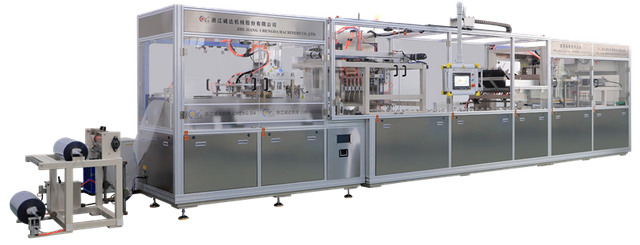
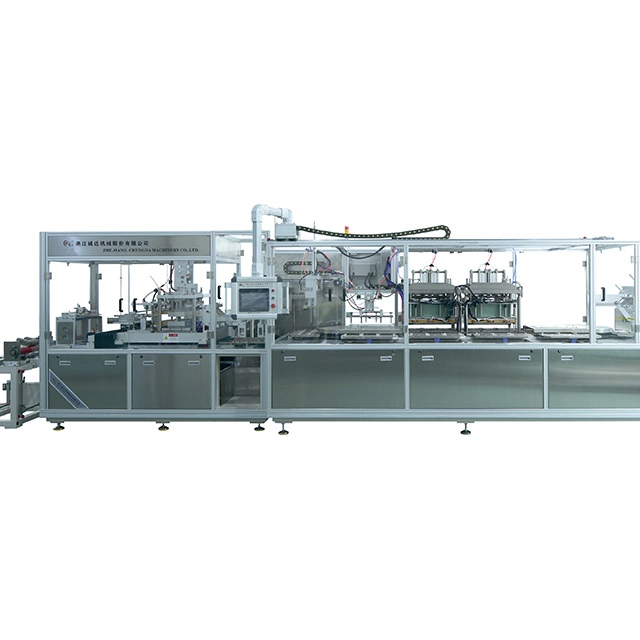
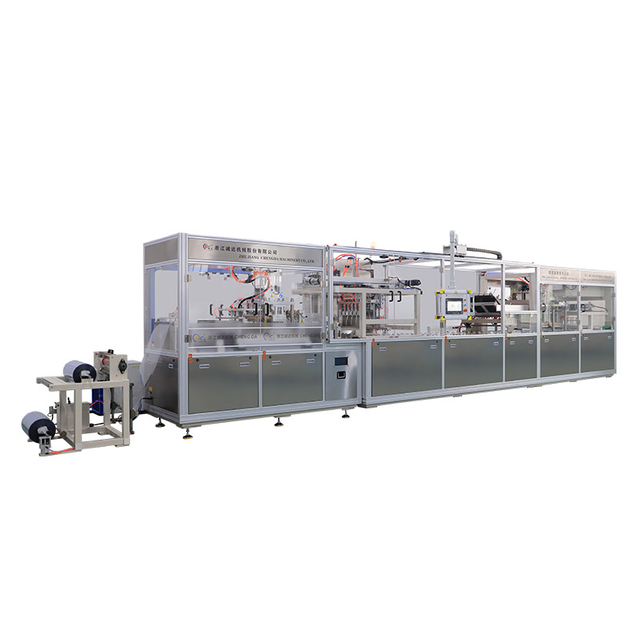
Chengda’s linear automatic blister packing machine provides one configuration to evaluate for product access and the proposed loading arrangement.
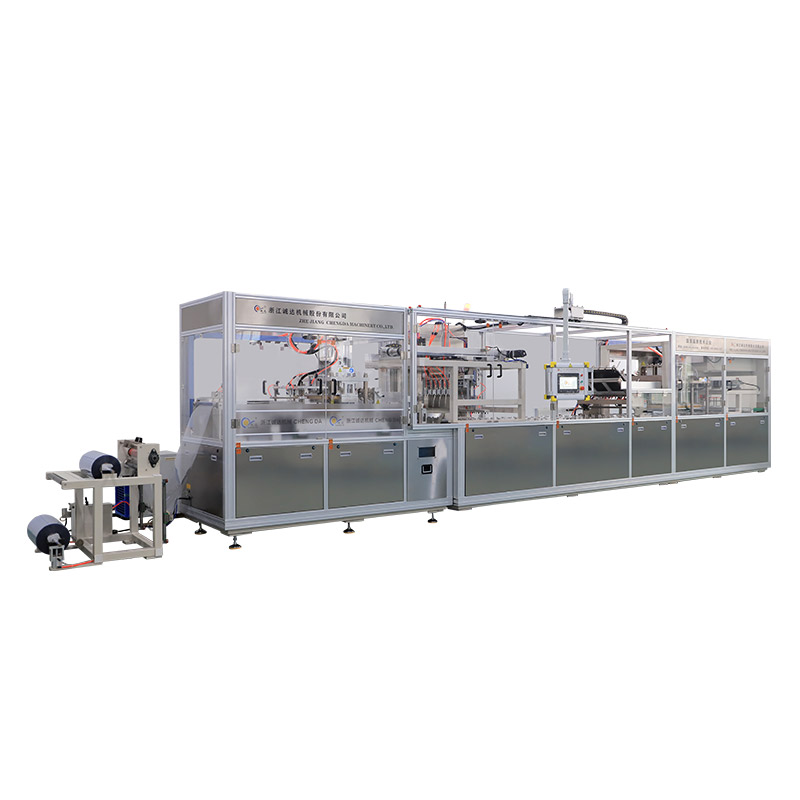
Its rotary automatic blister packing machine provides a different workstation arrangement.
Compare the actual loading plan rather than assuming either configuration is fully unattended.

There is no universal changeover-time advantage based only on flat or rotary terminology.
A format change may involve forming tools, sealing tools, cutting parts, carriers, feeders, guides, and control settings.
Define changeover time consistently: from the last acceptable pack of the previous format to the first acceptable pack of the next format.
Then check:
Parts that must be replaced.
Tools and lifting equipment required.
Adjustment and alignment work.
Cleaning and inspection.
Startup material consumption.
Operator training requirements.
If your production schedule includes several formats, test a representative changeover rather than relying on a generic estimate.
Review the complete installed system.
A compact machine body may still need space for access, material loading, guards, maintenance, and finished-pack handling.
Compare costs for:
Equipment and installation.
Each required tooling set.
Loading and inspection systems.
Labor and utilities.
Maintenance and spare parts.
Startup losses and rejected packs.
Changeovers and downtime.
Downstream integration.
Do not assume that rotary equipment is always more expensive or that flat tooling always costs less. Obtain quotations for the same product range and automation scope.
A machine name does not establish regulatory compliance or qualification difficulty.
For projects requiring documented qualification, define the intended use, critical process parameters, records, and acceptance criteria.
Confirm which documentation and control functions are included in the quotation.
Avoid selecting a machine on unsupported claims that one mechanism automatically passes audits or that another routinely causes validation delays.
The equipment and packaging process must be evaluated for the actual application.
Chengda lists linear and rotary automatic blister packing equipment.
The rotary product description includes forming and cutting the blister, transferring it to a sealing pallet, loading the product, placing the backing card, sealing, and discharging the finished pack.
This is why the rotary label should not be interpreted as proof of roller forming or roller sealing.
When reviewing Chengda’s blister machine range, request the proposed station layout and operating sequence for your packaging project.
Use those details to compare package quality, loading, output, and changeovers.
Not necessarily. Flat may describe tooling or sealing, while linear describes the transport layout. Ask the supplier to define the configuration.
No. Rotary may refer to a rotating workstation arrangement. Confirm the sealing mechanism separately.
Evaluate the forming station, material, cavity shape, and trial results. The machine name alone is insufficient.
Compare measured changeovers for your actual formats, including tooling, cleaning, adjustment, and restart checks.
Provide product samples or drawings, finished-pack dimensions, materials, target output, product mix, loading requirements, and downstream needs.
Choosing between machine layouts starts with your package and production requirements.
Contact Zhejiang Chengda Machinery with your product details, packaging materials, required output, and format-change schedule.
Request a proposed station layout and trial criteria so that you can compare forming, loading, sealing, and discharge on the same basis.