English
Views: 0 Author: Site Editor Publish Time: 2026-07-29 Origin: Site


Packaging lines historically relied on purely mechanical reliability to meet production quotas. Operators trusted heavy-duty gears, cams, and chains to run continuously. Today, that mechanical baseline falls short. Modern packaging environments demand data-driven predictability and Industry 4.0 connectivity to maintain tight margins. Legacy cartoning equipment hides significant operational drains. Unplanned downtime, frequent micro-stops, and inefficient changeovers quietly erode profitability. Furthermore, manual tracking makes it nearly impossible to calculate Overall Equipment Effectiveness (OEE) accurately in real time.
The necessary evolution in packaging automation centers on Smart Cartoning Machines. These advanced systems embed IoT sensors and real-time monitoring directly into the mechanical workflow. This integration shifts operational strategies entirely. Instead of reactive troubleshooting after a failure occurs, facility managers can execute predictive maintenance. Continuous optimization replaces guesswork, ensuring packaging lines run at peak efficiency with minimal unexpected interruptions.
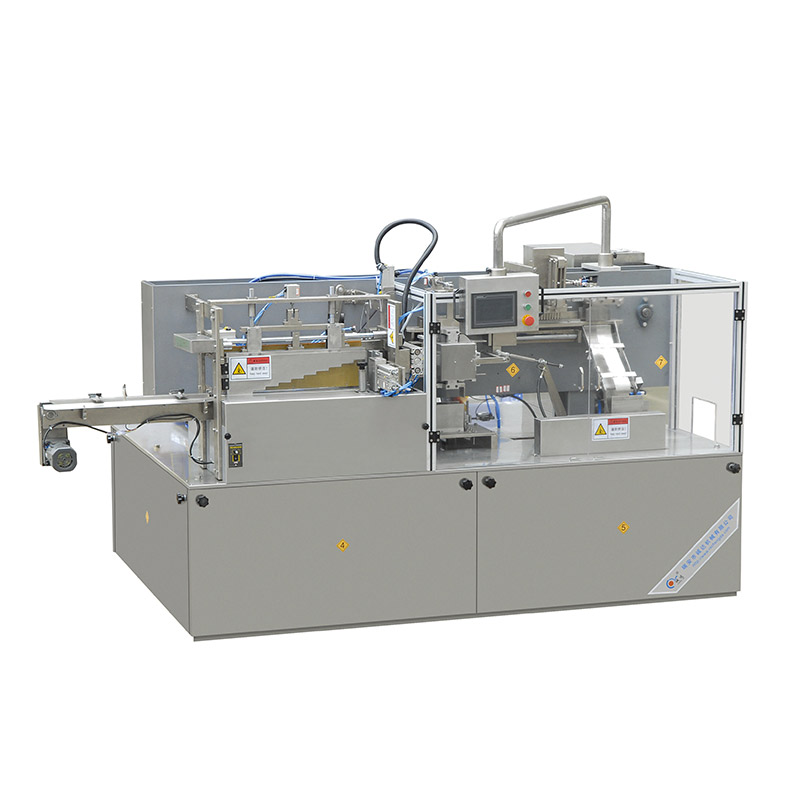
OEE Visibility: Smart cartoning machines replace manual tracking with automated, real-time OEE calculations, instantly identifying bottlenecks in the packaging process.
Predictive Over Reactive: IoT condition monitoring (vibration, temperature, torque) detects component wear before catastrophic failure, significantly reducing unplanned downtime.
Integration is Critical: Maximum ROI requires seamless interoperability between the cartoning machine's PLC and facility-wide MES, SCADA, or ERP systems using standard protocols (e.g., OPC UA, MQTT, IO-Link).
Table of Contents
The technical baseline for packaging has shifted dramatically. Legacy systems operate as isolated, mechanically driven islands. They rely on physical cams and localized relays. When a component fails, the machine stops abruptly. In contrast, network-connected, sensor-rich smart machines monitor their own health continuously. They utilize servo-driven mechanisms that provide constant feedback to the central controller. We see this on the floor every day. A mechanical cam wears down over months, and nobody notices until a carton gets crushed. Smart systems eliminate that blind spot.
Traditional Human-Machine Interfaces (HMIs) typically display basic binary alarms. A red light indicates a jam, but provides no context. IoT-enabled equipment delivers contextualized data alerts. Instead of merely signaling a fault, the system identifies the exact sensor, the specific deviation, and the likely mechanical cause. This depth of information drastically accelerates the troubleshooting process. You do not have to guess which flap folder is out of alignment.
Feature | Legacy Cartoning Equipment | Smart Cartoning Machines |
|---|---|---|
Drive Mechanism | Mechanical cams and main drive shafts | Independent servo motors |
Diagnostics | Binary HMI alarms (Pass/Fail) | Contextual IoT alerts and root-cause analysis |
Maintenance | Reactive (run-to-failure) or scheduled | Predictive (condition-based monitoring) |
Data Connectivity | Isolated or basic hardwired relays | OPC UA, MQTT, IO-Link integration |
Procuring new packaging equipment requires clear success criteria. The primary objective is reducing mean time to repair (MTTR). Detailed diagnostics allow technicians to arrive at the machine with the correct tools and parts immediately. Simultaneously, facilities must aim to increase mean time between failures (MTBF). Predictive alerts prevent minor wear from escalating into major mechanical breakdowns. Minimizing carton waste during startup and steady-state operations remains a critical metric for success. We track these metrics rigorously during site acceptance testing.
Labor optimization drives many upgrade decisions. Experienced packaging operators are increasingly scarce. Smart systems bridge this skills gap effectively. They guide less-experienced operators through automated changeovers using step-by-step HMI instructions. Built-in troubleshooting workflows reduce reliance on senior maintenance staff for routine faults. You can train a new operator in days rather than months.
Packaging materials are rarely perfectly consistent. Recycled paperboard grades exhibit significant variation in stiffness and porosity. Fiber directions change between supplier batches. Environmental humidity alters carton behavior on the production floor. Legacy machines struggle with these variables, often resulting in misfeeds or jams. We have all seen a pallet of slightly damp cartons shut down a line for hours.
Advanced cartoning systems use adaptive control loops to manage this variability. Servo motors detect minor resistance changes during the carton erecting phase. The machine automatically adjusts suction timing or mechanical force to compensate for stiffer or more porous board. This real-time mechanical adjustment prevents jams and maintains consistent output quality despite material fluctuations. The machine adapts before the operator even realizes there is a material issue.
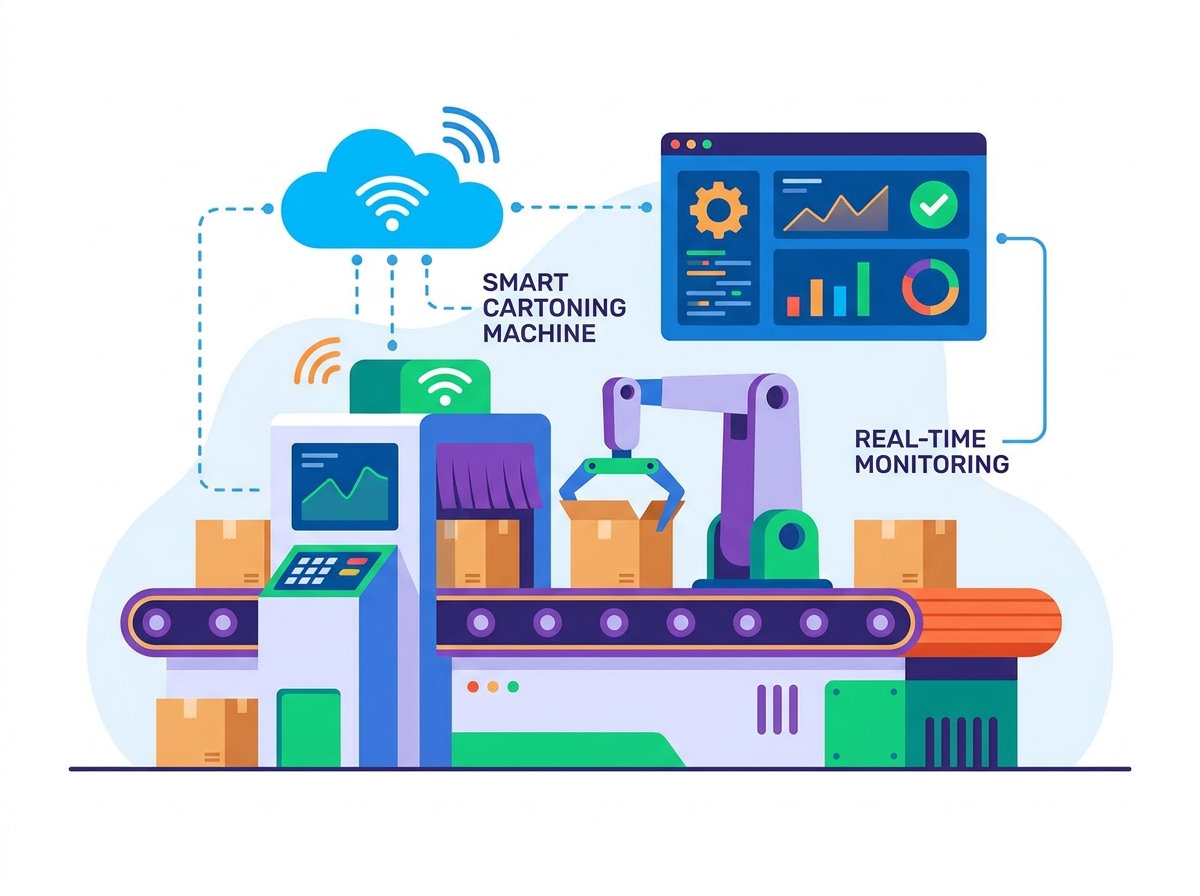
Modern packaging equipment relies on a dense network of specialized IoT sensors. Servo motor torque sensors monitor the precise force required to move mechanical linkages. Pneumatic pressure monitors ensure vacuum cups maintain adequate grip on carton blanks. Acoustic and vibration sensors attach directly to critical bearings and gearboxes to track mechanical resonance. We install these sensors at the factory level to ensure baseline accuracy.
These sensors establish a baseline of normal performance during optimal operation. The system continuously compares live data against this baseline. If a bearing begins to degrade, its vibration signature changes. The system flags this deviation in real time, long before human operators can hear or feel the issue. You get a warning on the dashboard weeks before the bearing seizes.
IO-Link technology plays a vital role in this architecture. It enables bi-directional communication between the main controller and individual sensors. This protocol provides diagnostics down to the device level. If a sensor lens becomes dirty or a cable frays, the IO-Link system reports the specific sensor fault immediately. Maintenance knows exactly which photoelectric eye needs cleaning.
Data processing location dictates reaction speed. Edge computing processes data locally, directly at the machine or within the facility network. This localized processing enables millisecond-reaction times. If a torque sensor detects a sudden spike indicating a jam, edge computing stops the servo instantly to prevent mechanical damage. We rely on edge controllers to protect the physical machinery.
Cloud analytics serve a different purpose. The cloud aggregates historical data across weeks, months, or multiple facilities. It handles long-term trend analysis. Cloud platforms identify subtle efficiency losses over time, helping engineers optimize machine parameters and compare performance across different production lines. You use the cloud to plan your quarterly maintenance schedules.
Format changes traditionally consume hours of valuable production time. Operators manually adjust guide rails, swap tooling, and calibrate sensors. Smart equipment utilizes motorized adjustments for rapid, repeatable format changes. Operators simply select a new product recipe on the HMI, and servo motors drive rails to their exact programmed positions. We have seen changeover times drop from two hours to ten minutes.
RFID-tagged tooling further reduces human error. When an operator installs a new format part, the machine reads the RFID tag. If the part does not match the selected recipe, the machine refuses to start. This foolproof system eliminates crashes caused by incorrect tooling installation. You cannot accidentally run a 50ml bottle recipe with 100ml carton tooling.
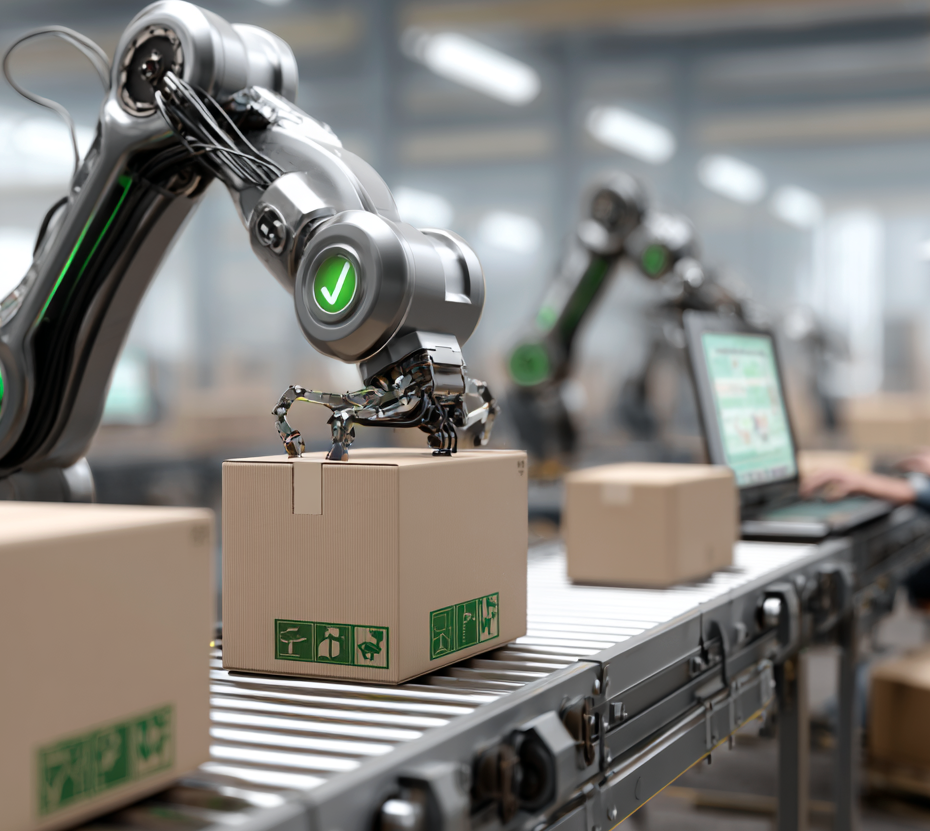
Condition monitoring translates directly into predictive maintenance. Early detection prevents catastrophic failures. Consider a main drive belt that begins to stretch. Torque sensors detect the slight timing discrepancy. The system alerts maintenance to schedule a belt replacement during the next planned shift change. This proactive intervention prevents a multi-hour line stoppage that would occur if the belt snapped mid-production. We schedule the fix when the line is already down for cleaning.
Vision systems integrate seamlessly with IoT data streams. High-speed cameras inspect every carton for open flaps, missing leaflets, or incorrect lot codes. Defective cartons are automatically rejected. More importantly, the system correlates the defect with mechanical data to identify the root cause in real time. If three cartons in a row have open flaps, the system checks the glue gun pressure.
Hot-melt glue systems require critical monitoring. Sensors track nozzle temperature, fluid pressure, and adhesive volume per application. If a nozzle partially clogs, the pressure drops. The system detects this immediately, rejects the compromised carton, and alerts the operator. This ensures joint integrity and prevents massive adhesive wastage or downstream line contamination. We avoid shipping unsealed cartons to the distributor.
Real-time monitoring extends to facility resources. Pneumatic air leaks represent a massive hidden expense in packaging facilities. Smart flow meters detect abnormal air consumption during machine idle states, pinpointing leaks for repair. Power consumption spikes indicate mechanical binding or inefficient motor operation. Tracking these metrics translates sustainability efforts into direct operational savings. You stop paying for compressed air that just vents into the room.
Isolated machines limit operational visibility. Open communication architectures are essential for modern facilities. Standard protocols like OPC UA, PackML, and MQTT allow seamless integration. These protocols connect the cartoning equipment directly to existing Manufacturing Execution Systems (MES) or Supervisory Control and Data Acquisition (SCADA) networks. This interoperability ensures production data flows freely from the plant floor to the executive dashboard. We map the PLC tags directly to the MES database.
Connecting factory equipment to broader networks introduces IT/OT convergence risks. Cybersecurity is paramount. Facilities must implement strict network segmentation, keeping operational technology (OT) separate from enterprise IT networks. Industrial firewalls monitor traffic for anomalies. Role-based access controls ensure that only authorized personnel can alter machine parameters or acknowledge critical safety alarms. You do not want someone in the front office accidentally changing a servo speed.
Regulated industries demand specific compliance features. In pharmaceutical packaging, machines must support 21 CFR Part 11 compliance. This requires secure electronic signatures, robust user authentication, and immutable audit trails for any parameter changes. Furthermore, the equipment must integrate with serialization systems to track individual drug packages. We validate these systems rigorously during installation.
For Food & Beverage applications, traceability is equally critical. Smart systems log production variables against specific batch numbers. This data supports Food Safety Modernization Act (FSMA) compliance, enabling rapid, targeted recalls if contamination occurs upstream. You can prove exactly what temperature the glue was at for batch number 4590.

Complex new systems risk rejection by the operators expected to use them. If an interface is confusing, operators will revert to manual overrides. Mitigating this risk requires prioritizing intuitive UI/UX design during the procurement phase. Facilities must invest heavily in comprehensive, vendor-led training programs. Operators need to understand not just how to run the machine, but how to interpret the data it provides. We spend a full week on site just walking operators through the HMI screens.
Configuring too many alarms paralyzes maintenance teams. When every minor deviation triggers a siren, operators begin ignoring them entirely. This alert fatigue defeats the purpose of condition monitoring. Facilities must establish strict, realistic thresholds. Utilizing AI algorithms helps filter nuisance alarms from critical mechanical warnings, ensuring technicians only respond to genuine threats. You only want an alert when something actually needs fixing.
Deploying all IoT features simultaneously often overwhelms plant personnel. A big bang deployment is rarely successful. A phased approach yields better adoption. Start by implementing automated OEE tracking to establish a performance baseline. Next, activate condition monitoring on critical wear parts. Finally, once the team trusts the data, implement full predictive maintenance algorithms and automated work order generation. We build confidence in the system step by step.
Smart Cartoning Machines have become a key component of Industry 4.0 packaging by combining intelligent automation, IoT connectivity, predictive maintenance, and real-time production monitoring. Beyond improving machine performance, these technologies help manufacturers increase Overall Equipment Effectiveness (OEE), reduce downtime, optimize resource utilization, and create highly connected, data-driven packaging operations capable of supporting long-term business growth.
To maximize the benefits of smart packaging automation, consider the following recommendations:
Assess your current packaging performance using OEE, downtime analysis, and maintenance data before upgrading to smart equipment.
Prioritize systems with open communication protocols, IoT connectivity, and seamless integration with ERP, MES, and SCADA platforms.
Implement predictive maintenance and automated changeover functions to reduce operational costs and improve production flexibility.
Roll out smart technologies in phases while providing comprehensive operator training and establishing robust cybersecurity strategies.
With decades of expertise in pharmaceutical packaging equipment and intelligent manufacturing solutions, Chengda has established itself as a globally recognized manufacturer of blister packaging machines, smart cartoning machines, and complete automated packaging production lines. Through continuous innovation, advanced research and development, precision engineering, and strict international quality management systems, Chengda delivers high-performance packaging solutions that help pharmaceutical, healthcare, food, cosmetic, and consumer goods manufacturers accelerate their digital transformation and achieve sustainable operational excellence.
From smart cartoning machines and blister packaging systems to fully integrated intelligent packaging lines, Chengda provides customized engineering, IoT-enabled automation solutions, production line integration, technical consulting, installation, operator training, and comprehensive after-sales support. By combining cutting-edge automation technologies with deep industry expertise, Chengda empowers manufacturers to build efficient, connected, and future-ready packaging facilities capable of meeting the evolving demands of global manufacturing.
A: ROI typically ranges from 12 to 24 months. This timeline is driven primarily by recovered OEE, reduced scrap materials, and significantly lower maintenance costs resulting from predictive interventions.
A: Yes, aftermarket sensors for vibration and temperature can be added to legacy machines. However, they often lack the deep PLC integration and automated changeover capabilities found in native smart machines.
A: They automatically categorize downtime reasons and track micro-stops that operators typically miss. By analyzing this real-time data, the system optimizes run speeds based on material conditions.
A: Servo-motor torque feedback and real-time suction sensor monitoring allow the machine to detect material resistance. The system makes instant, micro-adjustments to mechanical force and timing when handling stiffer or more porous recycled paperboard.
A: OPC UA, PackML, and IO-Link are the primary industry standards. These protocols facilitate reliable machine-to-machine communication and ensure seamless data transfer to higher-level MES or ERP systems.
A: Torque sensors on servo motors detect slight increases in mechanical resistance. This indicates a misaligned carton or debris buildup. The system pauses the machine immediately before the resistance escalates into a catastrophic jam.
A: Connected machines face risks like unauthorized remote access or ransomware attacks. Facilities must implement strict OT network segmentation, use secure VPNs for vendor remote support, and maintain air-gapped backups.