English
Views: 0 Author: Site Editor Publish Time: 2026-07-29 Origin: Site


End-of-line packaging has transitioned from mechanically driven, cam-operated equipment to highly synchronized, servo-driven mechatronic systems. Facilities can no longer rely on rigid machinery requiring constant manual adjustment. Operational bottlenecks drive urgent procurement decisions across the packaging sector. Labor shortages make staffing lines with experienced mechanics difficult. Unacceptable changeover downtimes eat directly into production schedules. High false-reject rates waste viable products, while stringent track-and-trace compliance mandates require flawless execution at every step of the packaging process.
Evaluating modern packaging solutions requires looking far beyond mechanical throughput or basic cartons per minute. You must analyze the underlying automation architecture. The way Programmable Logic Controllers (PLCs), machine vision, and robotics integrate determines whether a system delivers verifiable operational resilience. A well-integrated Cartoning Machinery setup transforms a packaging line from a rigid mechanical process into an agile, data-driven operation.
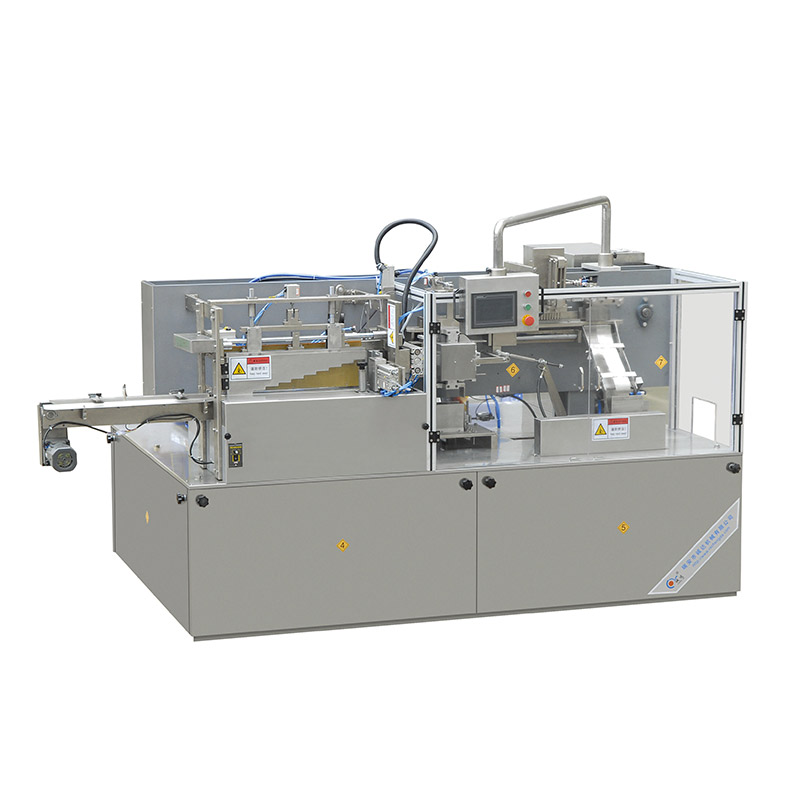
Automation Architecture Dictates Agility: The shift to PLC-driven, servo-motor cartoning machinery reduces mechanical changeovers to digital recipe selections, drastically improving OEE (Overall Equipment Effectiveness).
Vision Systems Drive Compliance: Integrated machine vision transitions quality control from a sampling process to 100% inline inspection, essential for serialization and regulatory compliance.
Robotics Solve Infeed Variability: Delta and SCARA robots eliminate the rigid constraints of traditional collating mechanisms, allowing cartoning machinery to handle diverse product shapes and delicate materials at high speeds.
Integration is the Primary Risk: The true cost of ownership hinges on the interoperability between the cartoner’s PLC, physical hardware, and existing plant-level MES/ERP systems.
Table of Contents
Legacy mechanical cartoners present severe limitations in modern production environments. These older systems rely heavily on centralized mechanical drives, complex gearboxes, and physical cams. They suffer from continuous wear and tear. They demand rigid product dimensions and require lengthy manual changeovers that stall production for hours. Legacy equipment is highly susceptible to jam-ups caused by minor variations in paperboard quality. When a jam occurs, operators manually clear the machine, reset the timing, and restart the line, resulting in significant lost capacity.
The mechatronic standard replaces centralized mechanical drives with distributed servo technology. A central PLC synchronizes individual servo motors located at critical machine axes. This decentralized approach eliminates the need for complex mechanical linkages. Software controls each motion profile rather than physical cams. This allows for precise, repeatable movements adjusted on the fly. Synchronization between the infeed conveyor, carton erection mechanism, product loader, and closing section becomes a digital process.
Dynamic material adaptability is a major advantage of modern mechatronic systems. Paperboard quality varies constantly on the floor. Recycled board calipers fluctuate, and humidity induces stiffness variations in carton blanks. Modern systems automatically adjust motor torque and speed to accommodate these variations. If a carton blank is slightly warped, the servo-driven vacuum pre-break system applies the exact force needed to erect it without tearing the board or causing a jam. This dynamic response keeps the line running smoothly despite material inconsistencies.
When shortlisting vendors, evaluate the ratio of mechanical adjustments to automated servo adjustments. A machine requiring operators to manually turn hand cranks and replace physical change parts for a new SKU is not truly mechatronic. Look for systems where the majority of changeover tasks execute via servo positioning based on a digital recipe selection.
Identify all manual adjustment points on the current legacy machine.
Map these points to automated servo-driven axes on the proposed new equipment.
Calculate the time saved per changeover by eliminating manual hand-crank adjustments.
Verify that the new system stores these servo positions in a digital recipe format.
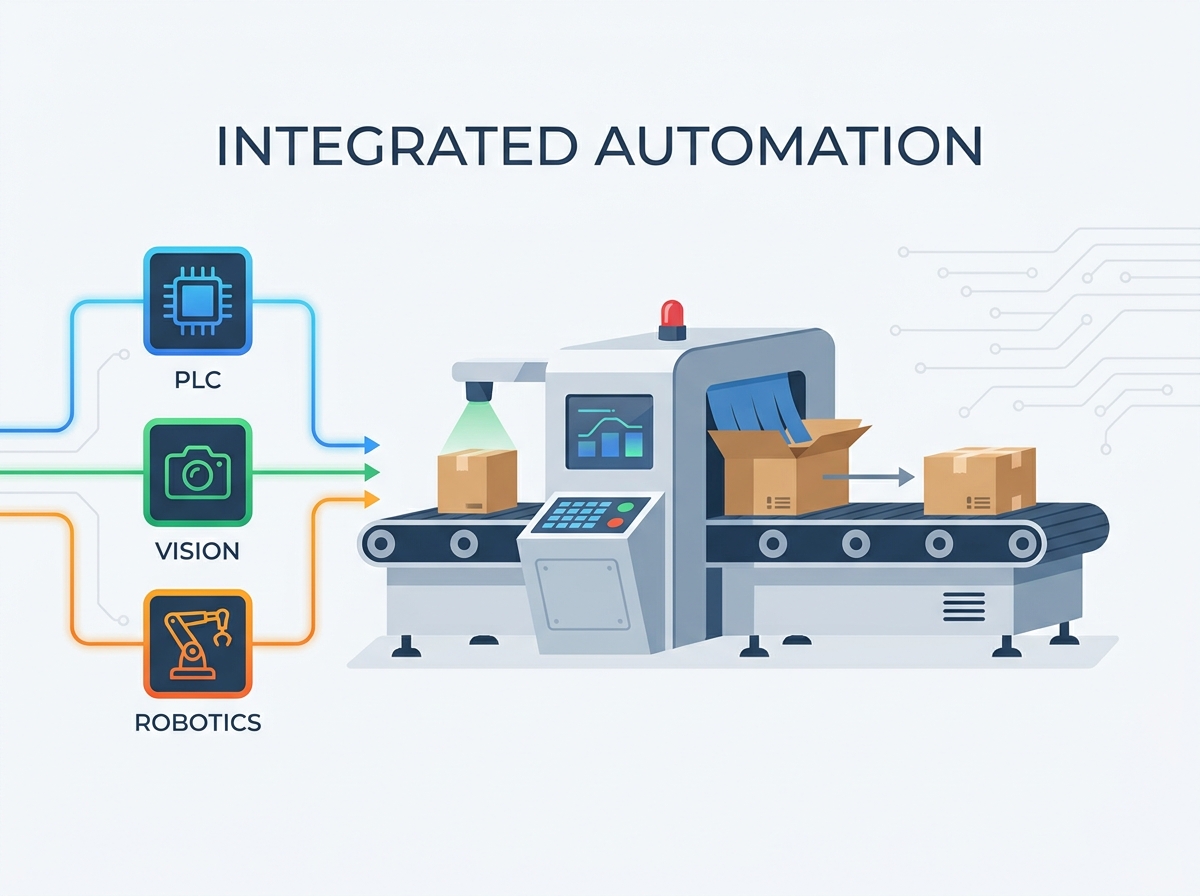
The control system acts as the brain of the machine. Buyers must choose between proprietary OEM control systems and open-architecture PLCs from established automation vendors like Rockwell Automation, Siemens, or Beckhoff. Proprietary systems lock you into the manufacturer's ecosystem. You rely entirely on the OEM for parts, updates, and troubleshooting. Open-architecture PLCs offer greater flexibility and control over your own equipment.
The long-term implications of open architecture are significant for plant maintenance. Maintenance is streamlined because parts are available globally through standard distribution channels. You are not dependent on a single OEM for a replacement drive or controller. It is much easier to hire qualified control engineers familiar with standard PLC platforms. Training new staff on a proprietary, niche control system adds unnecessary friction to your operations.
Standardization is necessary for seamless integration across the plant floor. IEC 61131-3 programming standards provide a universal framework for PLC software. Specifying equipment that adheres to these standards reduces vendor lock-in. It ensures your internal engineering team or third-party integrators can access, understand, and modify the machine code if necessary.
Modern PLCs do more than execute motion control. They act as powerful edge computing devices. They continuously gather real-time data from across the machine. This includes monitoring motor torque, bearing temperatures, vacuum pressure levels, and precise cycle times. This raw data is processed locally at the edge, reducing latency and filtering out noise before sending actionable metrics to supervisory systems.
Continuous data acquisition forms the foundation for predictive maintenance strategies. By establishing baseline torque profiles for specific servo motors, the PLC detects subtle anomalies. If a motor begins drawing slightly more current to execute the same motion, it indicates impending mechanical binding or bearing wear. The facility shifts from reactive repairs following a breakdown to scheduled interventions during planned downtime, protecting production uptime.
With increased connectivity comes the need for robust security architecture. OEMs often require remote access for troubleshooting and software updates. You must evaluate the secure remote access interfaces provided with the equipment. Hardware-based VPN switches and dual-IP isolation are necessary to allow OEM access to the machine network without exposing your broader plant network to external threats.
The Human-Machine Interface (HMI) bridges the gap between complex backend PLC logic and the frontline operator. A poorly designed HMI leads to operator errors and extended downtime. Prioritize intuitive, 3D visualization systems over text-heavy, legacy interfaces. The HMI should provide a clear, graphical representation of the machine's real-time status.
Guided troubleshooting is a highly valuable feature for floor operators. When a fault occurs, the HMI should display active fault-mapping, pinpointing the exact physical location of a jam, open guard door, or tripped sensor. The system should offer on-screen, step-by-step digital changeover instructions. This guides operators through necessary physical adjustments, verifying each step via sensor feedback before allowing the machine to restart.
Basic presence/absence photoelectric sensors are no longer sufficient for modern packaging requirements. Advanced 2D and 3D machine vision systems have become standard. While a basic sensor confirms a carton has passed a specific point, a vision system verifies the integrity, orientation, and accuracy of the product and packaging components.
Vision systems are essential for compliance and traceability. They read 1D and 2D barcodes to ensure the correct packaging materials are used for the specific product SKU. They utilize Optical Character Recognition (OCR) and Optical Character Verification (OCV) to verify lot numbers and expiration dates. For pharmaceutical and food-grade applications, these systems ensure strict adherence to 21 CFR Part 11 compliance, maintaining unalterable audit trails for serialization requirements.
False-reject mitigation directly recovers lost revenue. Older vision systems often reject acceptable products due to lighting variations or minor packaging glare. Modern systems utilize high-resolution imaging, polarized lighting, and dome illumination to overcome reflective packaging glare. AI-assisted vision tools differentiate between a critical defect and an acceptable cosmetic variation, drastically reducing false-reject rates.
A vision system must communicate seamlessly with the machine controller. Sub-millisecond communication protocols, such as EtherCAT or Profinet, are necessary between the vision processor and the PLC. This high-speed data exchange ensures inspection results are immediately actionable.
Closed-loop feedback has a profound operational impact. Instead of merely flagging a defect and stopping the machine, the system reacts dynamically. If the vision system detects a slight misalignment in the incoming product flow, it sends an offset coordinate to the PLC. The PLC automatically adjusts the robotic infeed alignment on the fly. Downstream reject gates actuate precisely to remove defective cartons without halting the continuous throughput of the line.
Equipment deployed in food, dairy, or pharmaceutical facilities must withstand harsh cleaning protocols. Vision sensors, cameras, and lighting systems must feature appropriate IP ratings. Washdown-rated components with IP69K enclosures are critical. These enclosures protect sensitive optics and electronics from high-pressure, high-temperature caustic washdowns, ensuring reliable inspection performance in demanding environments.
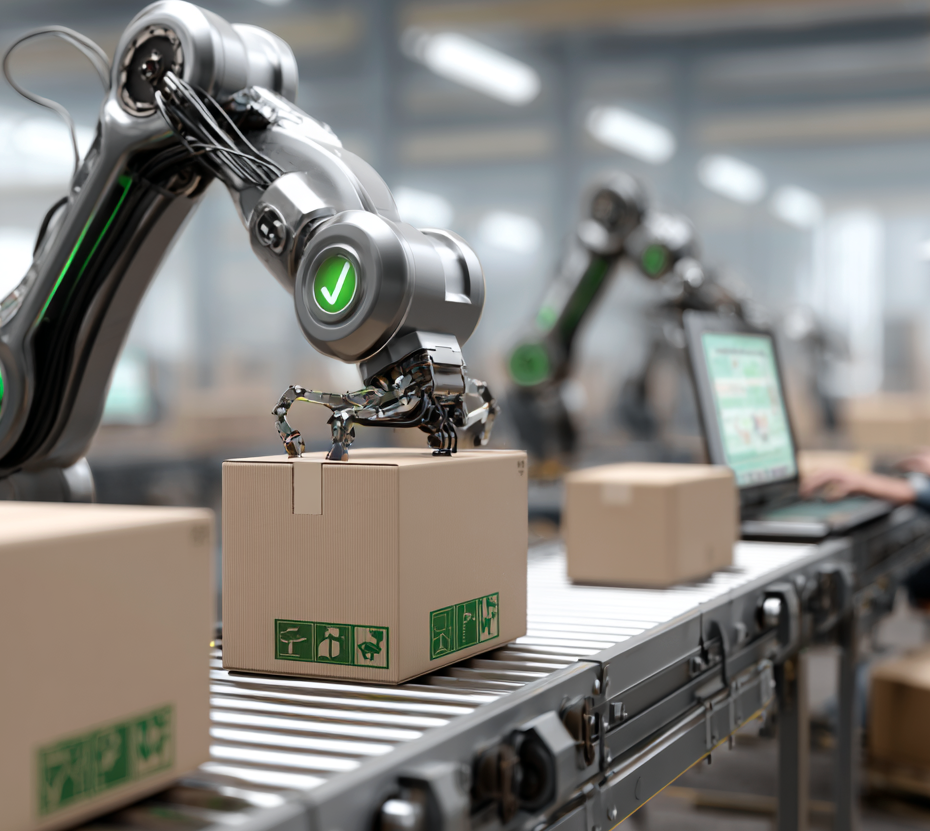
Selecting the right motion classification dictates line throughput and product handling capabilities. Continuous motion systems operate without stopping. The carton and the product move in parallel, and loading occurs dynamically. This is ideal for high-speed applications involving uniform product profiles. Intermittent motion systems index the carton, stopping it momentarily for loading or inspection. This is necessary for complex, multi-component kits or products requiring a defined dwell time for precise verification.
Feature | Continuous Motion | Intermittent Motion |
|---|---|---|
Throughput Speed | Very High (300+ CPM) | Moderate (50-150 CPM) |
Product Type | Uniform, single items | Complex kits, multi-packs |
Loading Mechanism | Dynamic barrel cam or robotic tracking | Stationary pushers or pick-and-place |
Dwell Time | Zero | Defined pause per cycle |
Robotic synchronization is critical in both classifications. Robotic pick-and-place paths must be programmatically coupled with the motion profile of the main conveyor. This is known as line tracking. The robot's controller calculates the exact position and velocity of the moving carton pocket, ensuring the product is placed perfectly without causing collisions or product damage.
Traditional collating mechanisms struggle with irregular or delicate products. Overhead Delta (spider) robots and SCARA arms provide the necessary dexterity and speed. Delta robots excel at high-speed picking from a moving belt and placing items into carton conveyor pockets. SCARA arms offer precise lateral movements for slightly heavier payloads.
Robotic kinematics offer unmatched scalability. When a new product SKU is introduced, you do not need to machine new mechanical tooling or custom collation buckets. You simply program a new pick-and-place trajectory. This flexibility allows the equipment to handle diverse product shapes, from flexible pouches to fragile baked goods, adapting rapidly to changing market demands.
Integrating collaborative robots (cobots) immediately downstream of the primary packaging equipment streamlines the transition to case packing or palletizing. Cobots are designed to work safely alongside human operators without the need for extensive physical guarding.
The primary value factor is footprint reduction. Traditional industrial robots require large, fenced safety cells that consume valuable floor space. Cobots utilize advanced force-limiting sensors to detect impacts, allowing them to operate safely in tight packaging facility layouts. They handle repetitive end-of-line tasks efficiently, freeing human operators for more complex responsibilities.
The trifecta of PLCs, Vision, and Robotics directly impacts the Availability, Performance, and Quality components of OEE. PLCs enhance Availability by reducing changeover times and preventing catastrophic failures through predictive maintenance. Robotics improve Performance by maintaining consistent infeed rates and eliminating manual handling bottlenecks. Vision systems guarantee Quality by ensuring 100% inline inspection and preventing defective products from reaching the market.
Avoid vendors making unrealistic claims of zero downtime. Focus on realistic OEE improvements. Upgrading to a fully integrated mechatronic system can realistically move a line from 65% to 85% OEE. This is achieved through automated fault recovery, drastically reduced jam frequencies, and the elimination of micro-stops caused by manual handling errors.
There is a clear conceptual trade-off between initial CapEx and long-term OpEx savings. Fully automated, push-button changeover systems require a higher initial investment. The operational savings are substantial. Reducing a 45-minute manual changeover to a 5-minute digital recipe change recovers hundreds of hours of production capacity annually.
Calculate the payback period based on your specific production profile. Determine the number of daily SKU changeovers and the hourly value of production downtime. The rapid changeover capabilities of modern mechatronic systems often justify the higher initial CapEx within the first 18 to 24 months of operation, especially for facilities managing high-mix, low-volume production runs.

New equipment rarely operates in a vacuum. It must integrate seamlessly with legacy upstream fillers, wrappers, and downstream case packers. Disparate control systems and incompatible communication protocols cause significant integration headaches, leading to bottlenecked production lines and unreliable data reporting.
To mitigate this risk, require PackML (ISA-TR88.00.02) compliance from the vendor. PackML provides a standardized machine-to-machine communication framework and uniform state models. This ensures the new equipment communicates its status clearly to upstream and downstream machines, enabling synchronized line control regardless of the equipment manufacturer.
Highly automated mechatronic systems require a higher baseline of technical literacy from operators and maintenance staff. The skills gap is a reality on the plant floor. If your team cannot effectively troubleshoot a servo drive fault or recalibrate a vision camera, the advanced features of the machine become liabilities rather than assets.
Address this proactively during procurement. Negotiate comprehensive, on-site vendor training into the contract. Request digital twin simulations that allow operators to practice changeovers and fault recovery in a virtual environment before touching the physical machine. Ensure the vendor provides augmented reality (AR) troubleshooting support to guide your maintenance team through complex repairs remotely.
Investing in modern packaging automation is an IT and automation integration project, not just a mechanical capacity upgrade. The winning vendor must demonstrate open PLC architecture, seamless vision integration, and proven robotic kinematics tailored to your specific product mix.
To ensure a successful deployment, follow these next steps:
Conduct a comprehensive site audit of your current changeover times and baseline OEE metrics.
Request a Proof of Principle (PoP) test for your most difficult-to-handle SKU to validate the vendor's proposed robotic kinematics.
Draft a detailed User Requirement Specification (URS) mandating open PLC architecture and PackML compliance.
Negotiate a minimum of two weeks of on-site operator and maintenance training into the final procurement contract.
Modern cartoning machinery is no longer defined solely by mechanical speed. The real competitive advantage comes from the seamless integration of PLC control, servo technology, machine vision, robotics, and intelligent data management. By investing in a highly integrated automation platform, manufacturers can improve Overall Equipment Effectiveness (OEE), reduce operational costs, strengthen regulatory compliance, and build packaging lines capable of adapting to future production demands.
To maximize the value of your automation investment, consider the following recommendations:
Evaluate PLC architecture, machine vision, and robotic integration as part of a complete packaging automation strategy rather than individual machine features.
Prioritize open communication protocols and flexible control systems to simplify future equipment upgrades and factory integration.
Validate machine performance through comprehensive Proof of Principle (PoP), Factory Acceptance Testing (FAT), and Site Acceptance Testing (SAT) before production deployment.
Invest in operator training and predictive maintenance programs to maximize equipment availability and long-term return on investment.
With decades of experience in pharmaceutical packaging equipment and intelligent manufacturing technologies, Chengda has become a trusted global provider of advanced blister packaging machines, cartoning machinery, and complete packaging automation solutions. Supported by continuous research and development, precision engineering, modern production facilities, and rigorous international quality standards, Chengda delivers innovative packaging systems that help pharmaceutical, healthcare, food, cosmetic, and consumer goods manufacturers achieve higher productivity, superior product quality, and sustainable operational growth.
From servo-driven cartoning machinery and blister packaging systems to fully integrated smart packaging lines, Chengda offers customized engineering, intelligent automation integration, technical consulting, installation, operator training, and comprehensive after-sales support. By combining advanced automation technology with extensive industry expertise, Chengda enables manufacturers to build efficient, data-driven, and future-ready packaging operations that remain competitive in an evolving global market.
A: Standard lead times typically range from 6 to 12 months. This timeframe accounts for detailed engineering design, component procurement, custom manufacturing, and the rigorous Factory Acceptance Testing (FAT) cycle required to validate robotic integration and vision system accuracy before shipment.
A: PackML provides standardized state models and tag naming conventions. This creates a uniform language for machine-to-machine communication, simplifying line integration with upstream and downstream equipment. It standardizes data collection, making OEE tracking and line performance analysis much easier across different OEM platforms.
A: Yes. Modern vision systems utilize polarized lighting, dome illumination, and multi-spectral imaging to eliminate glare caused by glossy paperboard or foil laminates. These advanced lighting techniques ensure high-contrast image capture, allowing the software to accurately read barcodes and verify text without false rejects.
A: Continuous motion systems load products into moving cartons at high speeds, ideal for uniform items. Intermittent motion systems index and pause the carton for loading. This dwell time is necessary for inserting complex multi-component kits, leaflets, or performing detailed vision inspections requiring a stationary target.
A: PLCs continuously monitor servo motor data, establishing baseline torque and current profiles. If a mechanism begins to bind due to bearing wear or lack of lubrication, the motor draws more current. The PLC detects this deviation and alerts operators to perform targeted maintenance before a catastrophic mechanical failure occurs.
A: Cobots generally operate at slower speeds than traditional industrial robots to maintain safe force limits. For high-CPM lines, cobots may require product buffering systems or dual-arm setups. If maximum throughput is the priority, traditional fenced industrial robots remain the standard for high-speed end-of-line integration.
A: Advanced systems use servo-driven vacuum pre-break mechanisms that apply precise, adjustable force to erect blanks. The PLC monitors torque in real-time. If a warped blank causes resistance, the system can reject the individual misshapen carton without jamming the mechanism or halting the entire production line.