English
Views: 0 Author: Site Editor Publish Time: 2026-07-29 Origin: Site


End-of-line packaging bottlenecks directly degrade overall equipment effectiveness. When cartoning inefficiencies take hold, throughput drops, labor demands spike, and material waste accumulates. The root cause often traces back to a fundamental mismatch between the cartoning equipment, the physical properties of the product, and the spatial realities of the facility. Selecting the wrong loading orientation inevitably leads to product damage, frequent mechanical jams, and severely capped production rates.
Addressing this challenge requires a strict technical evaluation of your packaging strategy. The decision between different cartoning orientations relies on a complex matrix involving product state, speed requirements, and available floor space. By aligning machine architecture with product physics, facilities can eliminate handling errors and maximize continuous operation. This guide breaks down the mechanical and operational distinctions necessary to make an informed equipment selection.
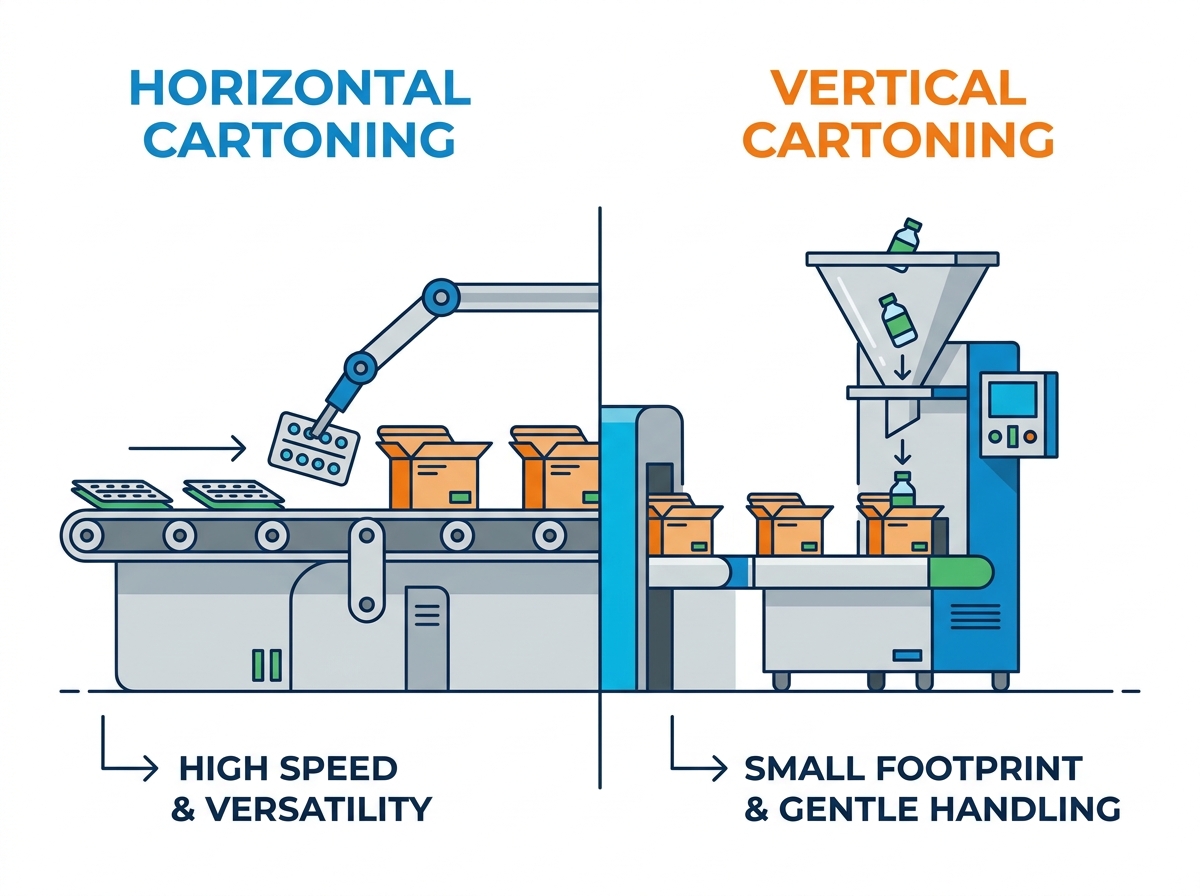
Product Physics Dictate Orientation: Horizontal machines excel with solid, stable, or tray-backed products, while vertical machines are mandatory for loose, granular, or gravity-fed items.
Throughput vs. Footprint Trade-off: Horizontal cartoners generally offer significantly higher production speeds, whereas vertical cartoners provide a compact footprint ideal for constrained floor plans.
Integration Realities: Upstream processing (e.g., blister packaging vs. multi-head weighers) heavily influences which cartoning orientation will integrate seamlessly without requiring complex product-handling conveyors.
Table of Contents
Horizontal cartoning relies on lateral movement to insert products into erected cartons. This process operates on either a continuous or intermittent motion basis, depending on the required speed and product stability. Products advance along an infeed conveyor parallel to the carton transport system. Once the carton is erected and positioned, a barrel cam loader or a series of robotic pushers laterally slide the product into the open carton. The mechanics here demand precision. If the timing is off by even a fraction of a second, the pusher will crush the product against the carton wall, leading to immediate line stoppages and material waste.
Because the product travels horizontally, standard closure methods like tuck-in flaps or hot melt glue applications are highly optimized for this linear travel path. The horizontal layout also facilitates the seamless integration of ancillary modules. For instance, pre-folded leaflet inserters or booklet feeders can be easily mounted alongside the insertion station. This specific architectural trait makes horizontal systems highly favored for pharmaceutical packaging lines where documentation must accompany every unit. Operators can easily monitor the leaflet feeding process from the side of the machine, clearing misfeeds without needing to climb platforms or halt the entire line for extended periods.
Furthermore, horizontal machines often utilize rotary carton feeders. These feeders pull flat blanks from a high-capacity magazine using vacuum cups, pre-breaking the score lines before placing the erected carton into the transport lugs. The continuous motion variants of these machines can achieve staggering speeds, but they require a massive linear footprint to accommodate the extended barrel cam loaders and the gradual acceleration/deceleration profiles needed to keep products stable during transit.
Vertical cartoning utilizes a top-loading process. Products enter the carton from above, relying on gravity-fed drops or precise pick-and-place robotics. The machine erects the carton, holds it securely in a vertical orientation, fills it from the top, and then folds and seals the upper flaps. This architecture fundamentally changes how the product interacts with the packaging material. Instead of forcing the product into a confined space laterally, vertical systems let gravity do the heavy lifting, allowing products to naturally settle into the bottom of the carton.
This vertical orientation allows for direct integration with overhead dosing and weighing equipment. Volumetric fillers, augers, multi-head weighers, and liquid fillers can be mounted directly above the primary cartoning zone. Vertical machines typically operate using intermittent indexing, pausing briefly to allow the product to drop and settle. Continuous vertical motion systems do exist for specific high-speed applications, but they are mechanically complex and require highly specialized funneling systems that track along with the moving carton.
The carton erection process in a vertical machine also differs. Blanks are typically pulled from a magazine and forced through a forming die or erected using a rotary star-wheel mechanism that holds the carton squarely from the bottom and sides. This ensures the carton remains perfectly upright and open while the product drops. If the carton leans or bows, the dropping product will catch the top flaps, causing spills and incomplete fills. Therefore, vertical machines rely heavily on rigid carton transport systems, often using custom-machined pockets or adjustable side-belts to maintain absolute control over the carton shape during the filling cycle.
Horizontal loading requires products that can withstand lateral pushing without losing their shape or integrity. The physics of lateral insertion demand strict product stability. If a product is prone to tipping, crumbling, or folding during a push, it will cause misfeeds and machine jams. Rigid backing, such as thermoformed trays or stiff flow-wrap films, greatly assists in horizontal pushing by providing a solid contact surface for the mechanical loader.
Ideal product profiles for horizontal loading include:
Blister packs and pharmaceutical strips
Frozen food trays and pizzas
Tubes, cosmetics, and ointments
Flow-wrapped items and bar goods
Solid, single-piece manufactured goods
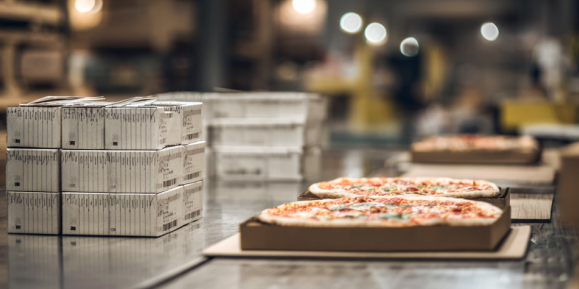
Consider a facility packaging frozen pizzas. The product is rigid, flat, and highly stable. Pushing it horizontally into an end-load carton is a straightforward mechanical action. The pusher arm makes contact with the edge of the pizza, sliding it smoothly into the carton. Now, imagine trying to load that same pizza vertically. You would have to drop it flat, displacing a massive volume of air inside the carton, which would cause the pizza to float or skew before hitting the bottom. Horizontal loading eliminates this aerodynamic interference, making it the only logical choice for large, flat, or highly stable items.
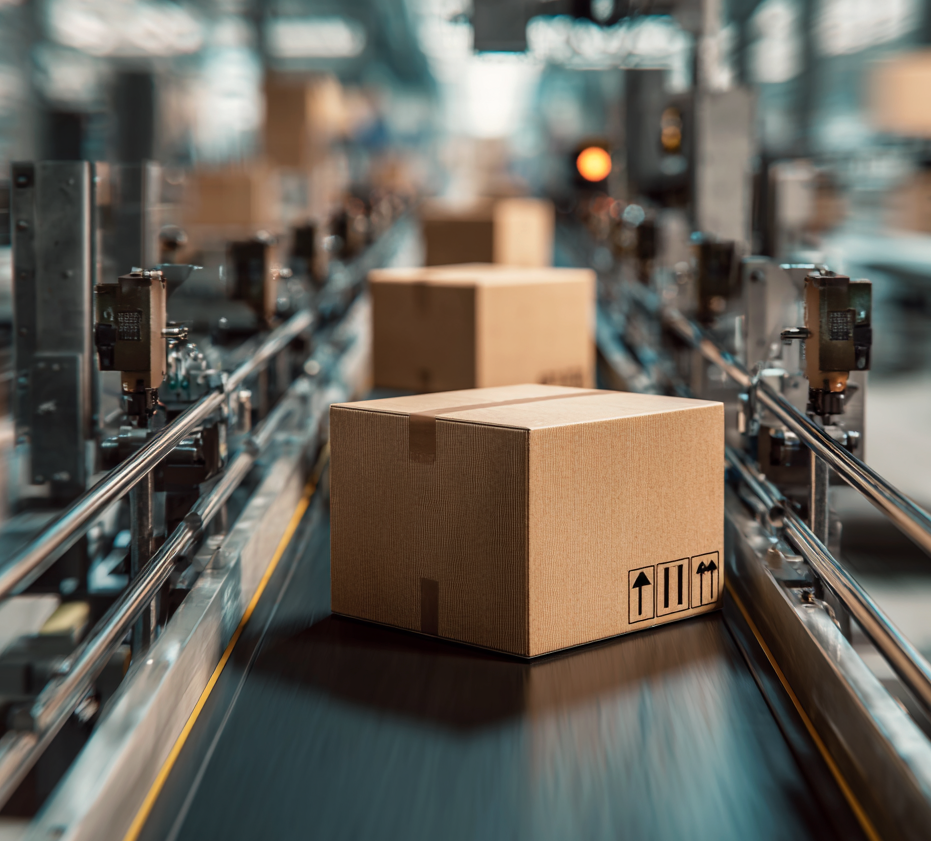
Vertical loading is designed for products that lack the structural stability for lateral insertion. Gravity does the work, making it the only viable option for certain physical states. Gravity assists in settling loose products naturally at the bottom of the carton. Vertical loading entirely prevents the shearing, crushing, or smearing associated with horizontal pushers. Furthermore, vertical gravity discharge systems can be enclosed to contain dust and fine particles, maintaining a clean operating environment when handling powders.
Ideal product profiles for vertical loading include:
Powders, spices, and granular products
Loose hardware, nuts, and bolts
Pasta, rice, and cereals
Fragile cosmetics and glass bottles
Multi-component kits and combo packs
Take loose hardware, for example. If you attempt to push a pile of screws horizontally into a carton, the pusher will simply scatter the screws across the machine bed. They have no collective structural integrity. By utilizing a vertical cartoner integrated with a multi-head weigher, the screws are dropped as a single batch directly into the open top of the carton. The vertical walls of the carton contain the product immediately. This principle applies equally to fragile items like glass cosmetics bottles. Pushing a glass bottle horizontally risks tipping it over or scratching the surface. Dropping it vertically, or using a top-loading pick-and-place robot, ensures the bottle remains upright and pristine.
The physical properties of the carton board significantly impact erecting reliability across different machine architectures. Carton caliper (thickness), inherent stiffness, and fiber direction determine how cleanly a blank snaps open. In horizontal machines, the carton must resist lateral pressure during product insertion. If the board is too flimsy, the pusher will crush the carton walls, leading to a jam that requires manual extraction. Operators must ensure the grain direction of the paperboard runs parallel to the depth of the carton to provide maximum column strength against the pusher arm.
In vertical machines, the carton must support the impact weight of the dropping product without bulging at the base. If you are dropping heavy items like metal fasteners or dense powders, a thin carton will deform upon impact. This deformation prevents the bottom flaps from sealing correctly and causes the carton to jam in the downstream discharge belts. Environmental tolerances also play a critical role. Moisture and humidity affect carton stock storage, warping the blanks and degrading vacuum pickup reliability. Rotary feeders on high-speed machines require perfectly flat blanks to maintain continuous operation without mispicks. Facilities must store carton blanks in climate-controlled environments to prevent the paper fibers from absorbing ambient moisture and losing their structural rigidity.
Different closure styles interact uniquely with machine orientations. Tuck-in closures, including airplane, reverse, and straight tucks, are easily processed on both machine types using static plows and rotary tuckers. The mechanical action of folding a flap and driving a tuck-tab into a slot is relatively straightforward, provided the carton board has been properly scored.
However, hot melt glue closures require specific footprint considerations. Inline glue guns on horizontal machines benefit from long compression belts, allowing ample dwell-time for the adhesive to set. The carton travels linearly, and side-belts hold the glued flaps shut until the bond cures. Vertical sealing tracks must achieve this compression within a shorter vertical space. Because the carton is standing upright, applying pressure to the top flaps without crushing the carton downwards requires specialized overhead compression belts. This often necessitates aggressive cooling systems or specialized fast-setting adhesive formulations to ensure the flaps do not pop open before the carton exits the machine.
Specialty closures, such as flip-top lids, tear-strips, and tamper-evident sleeves, generally favor horizontal configurations. These complex closures require multiple sequential folding stations. A horizontal machine's linear transport conveyor provides ample space to spread out these stations, allowing for precise, step-by-step manipulation of the carton flaps. Attempting to execute complex folds on a vertical machine often leads to cramped tooling and difficult maintenance access.
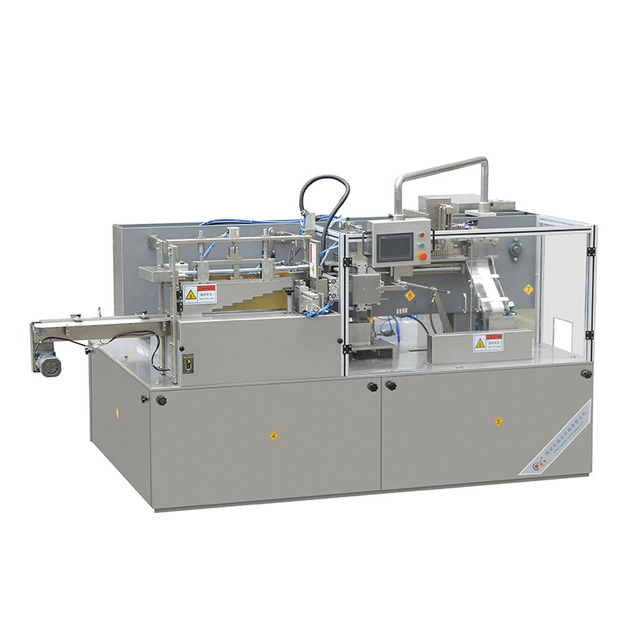
Production speed is a primary differentiator when evaluating a Horizontal vs Vertical Cartoning Machine. Continuous horizontal cartoners are engineered for high-volume environments, frequently exceeding 300 cartons per minute (CPM). The continuous linear motion eliminates start-and-stop inertia, allowing for rapid, fluid product insertion. The product and the carton move in parallel at the exact same speed, and the pusher cam smoothly transfers the product across the gap. This synchronization allows horizontal lines to keep pace with ultra-high-speed upstream equipment like rotary blister machines or multi-lane flow wrappers.
Conversely, intermittent vertical cartoners typically operate between 40 to 120 CPM. The maximum cycle speed in vertical applications is naturally limited by product settling time. Powders and loose items require a fraction of a second to fall and settle at the bottom of the carton before the top flaps can be folded. Attempting to outpace this gravitational reality results in product pinching, where the folding plows catch the unsettled product, destroying the seal integrity and creating a mess on the machine deck. Even with continuous motion vertical systems, the physical limitation of gravity dropping means vertical speeds rarely match the upper limits of horizontal systems.
Specification | Horizontal Cartoning Machines | Vertical Cartoning Machines |
|---|---|---|
Throughput Speed (CPM) | 100 to 300+ (Continuous) | 40 to 120 (Intermittent) |
Typical Footprint Size | Large linear footprint | Compact, square footprint |
Compatible Upstream Equipment | Thermoformers, Flow-wrappers | Multi-head weighers, Auger fillers |
Manual Loading Feasibility | Difficult at high speeds | Highly feasible and ergonomic |
Primary Carton Style | End-load cartons | Top-load cartons |
Product State Compatibility | Solid, stable, tray-backed | Loose, granular, fragile, liquid |
Facility layout strictly dictates machine selection. Horizontal machines demand significant linear floor space. They often require extended infeed conveyors, smart-belt phasing systems, and accumulation tables to synchronize product flow with the cartoner. This linear footprint can dominate a packaging hall, requiring operators to walk long distances to monitor different sections of the line. If your facility has long, narrow rooms, a horizontal line fits perfectly. However, if floor space is at a premium, a horizontal machine will create severe bottlenecking in forklift traffic and operator movement.
Vertical cartoners offer a compact, condensed footprint, making them ideal for tight floor plans. They trade horizontal space for vertical clearance requirements. Integrating multi-head weighers or volumetric fillers above a vertical cartoner often necessitates structural mezzanines. You must account for high facility ceilings and specialized access platforms for operators. If your building has low ceilings or restrictive overhead HVAC ducting, installing a vertical cartoner with an overhead weigher becomes a logistical impossibility. You must measure clear heights accurately before committing to a vertical architecture.
Mapping the cartoner to upstream equipment ensures seamless product transfer. Thermoformers producing blister packs and flow-wrappers discharging horizontal pouches feed naturally into the infeed buckets of horizontal cartoners. The product is already lying flat and moving linearly. Attempting to turn these products upright for vertical loading introduces unnecessary mechanical complexity, requiring twist-chutes or robotic pick-and-place units that add failure points to the line.
Alternatively, multi-head scales, auger fillers, and liquid filling nozzles rely on gravity discharge, feeding naturally into vertical cartoners. The product drops straight down into the waiting carton. Downstream integration also matters. Case packers, labelers, and checkweighers must align with the orientation in which the carton exits the machine. If a vertical cartoner discharges a carton standing upright, but your case packer requires the carton to lie flat, you must install a carton-turning device. Every time you manipulate the carton after it leaves the machine, you increase the risk of scuffing the graphics or dropping the product.
Multi-SKU facilities require rapid changeovers to maintain high OEE. Mechanical adjustments for carton size changes vary between architectures. Modern machines utilize toolless quick-change mechanisms with digital readouts, while older or baseline models rely on bolt-on format parts. A horizontal machine typically requires adjusting the width of the product infeed buckets, the height of the overhead carton confines, and the stroke length of the pusher arms. This can be a time-consuming process if the machine relies on manual hand-cranks.
Format parts, or change parts, require dedicated storage racks and represent an ongoing expense as new carton sizes are introduced. The industry is rapidly transitioning from manual, wrench-based changeovers to automated, servo-driven adjustments where guide rails and transport lugs automatically reposition themselves at the push of a button based on pre-programmed recipes. Vertical machines often require changing out the entire carton forming die or the drop chute funnel to accommodate different carton openings. If the drop chute is too small, the product bridges and jams. If it is too large, it interferes with the carton flaps. Managing these format parts requires strict 5S organization on the plant floor.
Handling raw, frozen, or loose food products mandates strict adherence to sanitary design principles. Vertical machines handling loose foods often require high IP washdown ratings, such as IP65 or IP69K. This allows for aggressive chemical cleaning and high-pressure hosedowns without damaging sensitive electronics, servo motors, or pneumatic valve banks. The frame must be constructed of sloped stainless steel to prevent water pooling, and all bearings must be sealed and lubricated with food-grade grease.
Horizontal machines handling flow-wrapped or tray-packed foods focus heavily on debris management. Crumb collection trays are strategically located under horizontal transfer sections and pusher mechanisms to catch product fragments. If a flow-wrapper accidentally cuts a product in half, the horizontal pusher will shove those crumbs into the machine bed. Without proper collection trays, this debris builds up, harboring bacteria and eventually jamming the mechanical linkages of the carton transport system. Operators must be able to easily slide these trays out for cleaning during shift changes without using tools.
Pharmaceutical packaging lines operate under stringent regulatory frameworks. Cartoners must integrate seamlessly with serialization modules, 2D data matrix printers, and high-speed verification scanners to ensure full traceability. Every carton must be printed with a unique serial number, and a camera must verify that print before the carton leaves the machine. Any carton failing vision inspection must be positively rejected into a locked bin before leaving the machine to prevent counterfeit or unreadable products from entering the supply chain.
Good Manufacturing Practices (GMP) validation is critical. Horizontal blister and leaflet cartoning machines are designed with balcony-style architecture. This design separates the mechanical drive components at the back of the machine from the product handling areas at the front. It provides clear line-of-sight and easy access for line clearance. This design prevents cross-contamination by ensuring no stray pills, blisters, or leaflets can hide within the machine frame during a batch changeover. Operators can visually inspect the entire product path, ensuring absolute compliance with FDA regulations.

Misaligned products entering a horizontal pusher station cause catastrophic jams, leading to machine downtime, torn cartons, and damaged goods. If a blister pack is skewed in the infeed bucket, the pusher will crush it against the carton opening, shattering the pills and bending the pusher arm. Recovering from this type of jam requires manually extracting the crushed product, cleaning the area, and resetting the machine timing.
Mitigating this risk requires implementing vision inspection systems and profile sensors prior to the loading station. These sensors detect skewed or stacked products and trigger an automated reject station to eject the misaligned items before they reach the cartoning zone. Additionally, installing torque limiters on the pusher arms ensures the machine immediately halts if abnormal resistance is detected, preventing mechanical damage to the drive shafts.
In vertical applications, products may not settle fully before the top carton flaps are folded. This causes the folding plows to pinch the product, compromising the seal and creating bulging carton walls. A bulging carton will not fit into the downstream case packer, causing secondary jams at the end of the line. This is especially problematic with lightweight, bulky items like potato chips or loose leaf tea.
To mitigate settling failures, integrate vibratory rails or mechanical tamping devices along the carton transport conveyor. Controlled vibration forces loose products to nest tightly at the bottom of the carton, eliminating air pockets and ensuring clear headspace for the folding mechanisms. For extreme cases, overhead mechanical tampers can physically press the product down just before the flaps are glued.
Manual-assist vertical loading can lead to repetitive strain injuries if the drop chutes are positioned poorly. Operators forced to lift heavy bulk products above shoulder height will fatigue quickly, leading to inconsistent loading rates and potential workplace injuries. Furthermore, accessing high-mounted hoppers and weighers on vertical systems presents fall hazards and maintenance difficulties.
Specify ergonomic, low-profile manual load stations that keep operator arm movements within a safe, neutral zone. For maintenance access, install automated step-platforms, service lifts, and secure mezzanines with proper guardrails to ensure technicians can safely clean and calibrate overhead dosing equipment without relying on unstable ladders.
Locking into a specific machine orientation can become a liability if primary packaging formats change. Moving from a rigid bottle (horizontal compatible) to a flexible stand-up pouch (vertical compatible) can render existing equipment obsolete. If marketing decides to change the product format entirely, a rigid, single-purpose cartoner becomes a massive stranded asset.
Conduct a comprehensive product roadmap review before finalizing machine specifications. Select modular machines with adaptable infeed lanes and robotic loading options that offer a wider tolerance for varying product shapes and rigidities. Robotic pick-and-place loaders can be reprogrammed to handle new shapes, whereas mechanical barrel cams must be entirely rebuilt.
Choosing between a horizontal and vertical cartoning machine is not simply a matter of machine preference—it is a strategic decision based on product characteristics, production capacity, packaging requirements, and facility layout. By selecting the right machine architecture and ensuring seamless integration with the entire packaging line, manufacturers can significantly improve efficiency, reduce downtime, and achieve more reliable long-term production performance.
To make the best equipment investment, consider the following recommendations:
Evaluate product characteristics, packaging formats, and production goals before determining the appropriate loading orientation.
Verify compatibility with upstream processing equipment and downstream packaging systems to ensure smooth production flow.
Consider factory floor space, ceiling height, and future packaging expansion when planning equipment installation.
Perform Factory Acceptance Testing (FAT) using actual products and carton materials before approving final machine delivery.
With decades of experience in pharmaceutical packaging equipment and intelligent automation technology, Chengda has earned the trust of customers worldwide as a leading manufacturer of blister packaging machines, cartoning machines, and complete pharmaceutical packaging production lines. Backed by continuous research and development, precision engineering, advanced manufacturing capabilities, and strict international quality management systems, Chengda delivers innovative packaging solutions that meet the evolving demands of pharmaceutical, healthcare, food, and consumer goods manufacturers.
From horizontal and vertical cartoning machines to blister packaging systems and fully integrated packaging lines, Chengda provides customized equipment design, intelligent automation solutions, technical consulting, installation support, operator training, and comprehensive after-sales services. By combining cutting-edge packaging technology with customer-focused engineering expertise, Chengda helps manufacturers enhance productivity, improve packaging quality, and build highly efficient, future-ready production facilities.
A: It is generally not feasible to run loose or granular products horizontally without pre-packaging them into a bag, pouch, or tray first. Lateral pushing mechanisms will scatter loose products, causing severe jams and incomplete carton fills.
A: Continuous horizontal cartoners are built for high speeds, frequently exceeding 300 cartons per minute. Vertical cartoners typically operate between 40 to 120 cartons per minute, as they must pause to allow products to drop and settle via gravity.
A: Vertical cartoners have a significantly smaller linear footprint, making them ideal for tight spaces. However, they require higher ceiling clearance to accommodate overhead gravity-fed integration, such as multi-head weighers.
A: While hybrid or highly customized robotic cells exist that can alternate orientations, they are exceptionally rare, highly expensive, and generally less efficient than purpose-built directional cartoners designed for a specific product flow.
A: The standard rule of thumb is straightforward: solid, stable, and rigid products require horizontal cartoning. Loose, granular, liquid, fragile, or multi-component products require vertical cartoning utilizing gravity feeds.
A: Changeover times vary widely based on machine technology. Modern machines with automated, servo-driven adjustments can complete a changeover in under 10 minutes, while older machines requiring manual wrench adjustments and heavy format parts may take up to an hour.