English
Views: 0 Author: Site Editor Publish Time: 2026-07-29 Origin: Site


Packaging lines face escalating pressure from persistent labor shortages, rapid SKU proliferation, and an unrelenting demand for higher throughput. Facilities can no longer rely on legacy mechanical systems to keep pace with modern production schedules. Outdated or semi-automated cartoning equipment introduces severe bottlenecks, particularly during changeovers, while suffering from inconsistent quality control and excessive maintenance downtime. These limitations force operations to run below optimal capacity, leading to missed targets and compromised product integrity.
Upgrading to modern Automation Cartoning Machines represents a strategic shift toward data-driven, flexible manufacturing. Advanced systems integrate seamlessly into digital facility architectures, offering unprecedented control over packaging variables. This technical evaluation guides operations and procurement leaders through the specific features, engineering advancements, and integration strategies necessary for shortlisting next-generation packaging equipment.
Shift to Servo-Driven Flexibility: Modern automation relies on independent servo motors rather than mechanical linkages, drastically reducing changeover times for high-mix production environments.
Robotics & Vision Integration: The standard for automated cartoners now includes integrated Delta/SCARA robots and 3D vision systems to handle delicate, irregularly shaped, or misaligned products without jamming.
Predictive Maintenance is the New Baseline: IoT-enabled sensors are shifting maintenance from reactive to predictive, directly impacting Overall Equipment Effectiveness (OEE) and reducing unplanned downtime.
Table of Contents
The transition from traditional chain-and-sprocket mechanical cartoners to advanced mechatronic systems marks a fundamental evolution in packaging technology. Legacy machines relied on a single main drive motor connected to a complex web of belts, chains, and gears. This mechanical linkage meant that any adjustment required physical intervention. Wear and tear on a single component could throw the entire machine out of synchronization. You would often see operators spending hours adjusting mechanical timing just to get a line running smoothly again.
Modern mechatronic systems replace these physical linkages with independent servo motors controlled by centralized software. This electronic synchronization eliminates the backlash and stretching associated with chains. It ensures precise timing across the entire cartoning cycle. The result is a dramatic reduction in mechanical wear, lower maintenance requirements, and the ability to make micro-adjustments on the fly without stopping production. When a jam occurs, servo drives can detect the torque spike and halt the specific axis instantly, preventing catastrophic machine damage.
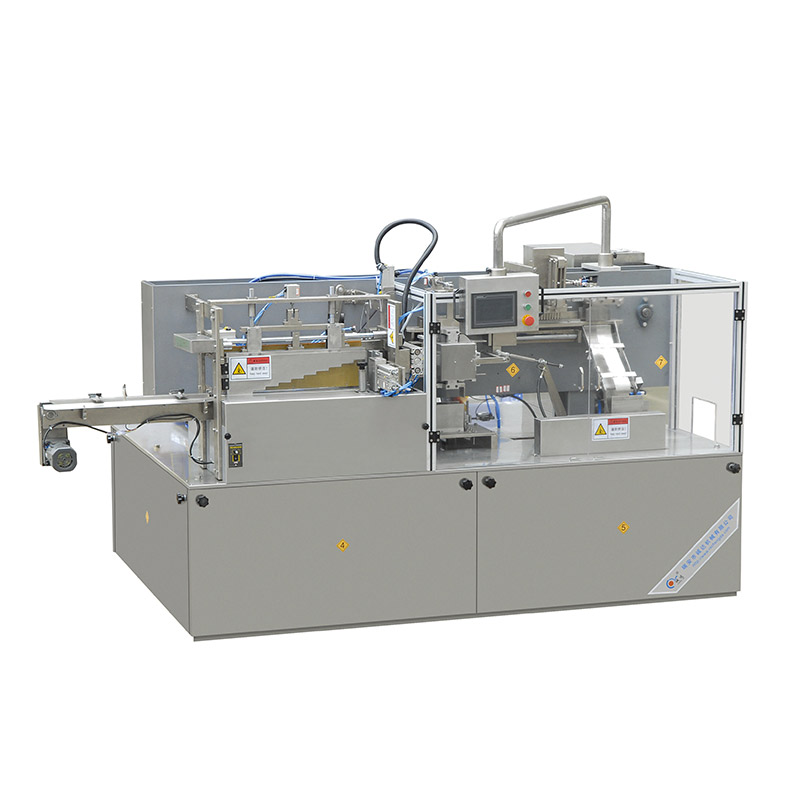
Traditional flighted chains dictate a fixed pitch, limiting the machine's ability to handle multiple carton sizes efficiently. The industry is rapidly adopting smart conveyance technologies, utilizing linear motor systems and independent shuttle tracks. These systems allow each carton or product carrier to move independently along the magnetic track. Operators can program variable pitches, acceleration profiles, and dwell times for individual shuttles.
If a specific loading station requires more time for a complex insertion, the shuttle can pause without halting the entire line. This decoupled motion control maximizes throughput. It allows a single machine frame to accommodate a vastly wider range of carton dimensions and product configurations. We see this heavily utilized in pharmaceutical packaging where different blister pack counts require entirely different carton lengths.
Comparison of Conveyance Systems | ||
Feature | Traditional Flighted Chains | Linear Motor Shuttles |
|---|---|---|
Pitch Adjustment | Fixed; requires mechanical change parts | Variable; adjusted via HMI software |
Motion Control | Synchronized continuous movement | Independent control per shuttle |
Maintenance | High; requires frequent lubrication and tensioning | Low; magnetic propulsion with minimal moving parts |
Changeover Time | 30 to 60 minutes | Under 5 minutes |
Selecting the correct motion profile aligns equipment capabilities with production requirements. Intermittent motion cartoners operate on a stop-and-go principle. The carton stops at each station for erecting, loading, and sealing. This dwell time is essential for complex applications. Inserting multiple components like a pharmaceutical bottle, a dosing spoon, and a leaflet into a single carton requires this stationary window. The mechanics must handle the inertia of starting and stopping rapidly without vibrating the product out of alignment.
Continuous motion machines never stop. Products and cartons move in parallel. Loading mechanisms track alongside the carton to insert the product dynamically. Continuous motion is engineered for high-speed, uniform product runs where simple, single-item insertions dominate. Understanding the specific payload complexity dictates which motion profile will deliver optimal reliability. Pushing an intermittent machine past its designed cycle rate usually results in torn carton flaps and misloaded products.
Modern packaging equipment functions as an active data node within the broader facility network. Programmable Logic Controllers (PLCs) now feature native connectivity to Supervisory Control and Data Acquisition (SCADA) and Enterprise Resource Planning (ERP) systems. Standardized communication protocols ensure that machines from different vendors communicate using a uniform data structure. PackML (Packaging Machine Language) and OPC UA are the standard bearers here.
This connectivity enables real-time production tracking, remote diagnostics, and automated reporting. Operations managers gain immediate visibility into machine states, fault codes, and throughput metrics. You can track exactly which sensor triggered a fault and how long the operator took to clear it. This allows for agile decision-making and rapid response to line bottlenecks. It shifts the focus from guessing why a machine stopped to analyzing data trends to prevent the next stop.
High-speed robotics have become integral to the infeed sections of modern cartoners. Delta and SCARA (Selective Compliance Assembly Robot Arm) robots are routinely deployed to pick products from random orientations on an incoming conveyor. They place them precisely into the cartoning machine's product buckets. When evaluating robotic integration, engineers must analyze payload capacities, maximum reach, and cycle times against the specific weights of the products and the target line speeds.
Robotics offer unmatched flexibility and gentle handling. This is ideal for fragile items like blister packs, glass vials, or baked goods. However, they require a larger physical footprint than traditional barrel cam loaders. Collaborative robots (Cobots) are also entering this space. They offer the ability to work alongside human operators without extensive safety caging. Cobots typically operate at lower cycle speeds but provide excellent utility for end-of-line case packing or palletizing tasks directly after the cartoner.
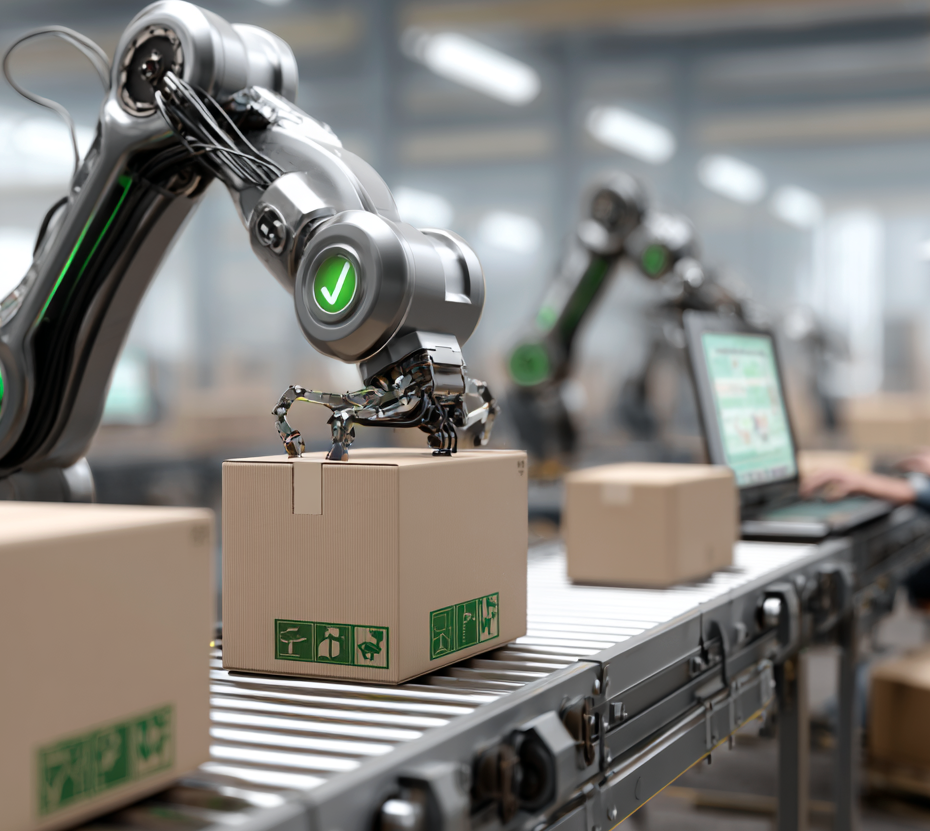
Quality assurance has shifted from manual spot-checks to 100% automated inline inspection. AI-driven and 3D vision systems are mounted at critical junctions throughout the cartoning process. These cameras verify product orientation before insertion. They read 1D and 2D barcodes to ensure the correct packaging materials are used. They also inspect the final flap closures for proper sealing.
Vision systems act as a strict compliance gatekeeper. They automatically reject defective units without stopping the machine. Implementing these systems requires careful consideration of the operating environment. Ambient lighting changes, dust from carton board, and vibration can trigger false rejects. Proper calibration, shielding, and high-speed processing software are necessary to maintain line efficiency while ensuring zero defects reach the end-of-line.
Lighting Calibration: Install polarized filters to eliminate glare from glossy carton finishes.
Trigger Timing: Synchronize the camera trigger with the encoder on the main servo drive to capture images at the exact same position every cycle.
Tolerance Setting: Define acceptable pixel variations for flap closures to prevent false rejects from minor, acceptable board warping.
Reject Verification: Install a secondary sensor downstream of the reject mechanism to confirm the defective carton actually left the conveyor.
In high-mix manufacturing, the time taken to switch between SKUs directly impacts line availability. The trend is moving rapidly toward recipe-driven, automated changeovers. Operators no longer manually adjust hand-cranks or read mechanical counters. Motorized spindles and linear actuators automatically adjust guide rails, carton magazine widths, and vacuum cup placements based on a pre-programmed recipe selected on the Human-Machine Interface (HMI).
This technology can reduce a 45-minute manual changeover to under 5 minutes. This convenience introduces mechanical complexity. Precise servo calibration is required to prevent micro-collisions between moving parts during the automated adjustment sequence. Maintenance teams must be trained to troubleshoot these motorized adjustment points. If an actuator fails, the machine must have a manual override feature to allow production to continue while awaiting replacement parts.
Adhesive application has evolved significantly with the introduction of precision hot-melt glue controllers. These smart systems automatically adjust the volume of adhesive dispensed based on the real-time speed of the machine. This prevents excessive glue application and stringing during ramp-up or ramp-down phases. It keeps the machine clean and reduces adhesive waste.
Simultaneously, the packaging industry is shifting toward sustainable, recycled board and alternative fiber-based materials. These eco-friendly materials often exhibit high spring-back characteristics and variable porosity. To process them reliably, cartoners require specialized pre-break stations. These stations aggressively fold the carton scores beyond 90 degrees before erecting. The smart gluing systems must be capable of applying high-tack, rapid-set adhesives to hold the stiff recycled flaps securely until the glue cures.
When evaluating new equipment, true throughput must be measured in sellable cartons per minute, not just the theoretical maximum cycle speed of the machine. A machine running at 300 cycles per minute with a 10% reject rate and frequent jams yields lower true throughput than a highly reliable machine running at 250 cycles per minute. Integrating these systems into existing brownfield sites requires careful spatial planning.
Compact, monoblock cartoning designs save floor space but can be challenging to access for maintenance. Modular, linear systems offer excellent accessibility and the ability to add future stations, but demand a significantly larger footprint. Facilities must balance the physical constraints of their layout with the operational need for maintenance accessibility. You cannot sacrifice the ability for a technician to safely reach a jammed mechanism just to save a few feet of floor space.
Machine Architecture Comparison | |||
Architecture Type | Footprint | Maintenance Accessibility | Scalability |
|---|---|---|---|
Monoblock Design | Compact; ideal for tight brownfield sites | Challenging; internal components are densely packed | Low; difficult to add new feeding stations later |
Modular Linear Design | Expansive; requires significant floor space | Excellent; walk-in access to most stations | High; easy to bolt on additional modules or robots |
Automation directly influences the three core pillars of OEE: Availability, Performance, and Quality. Servo-driven reliability and predictive maintenance sensors increase Availability by reducing unplanned breakdowns. Automated changeovers and independent shuttle systems enhance Performance by maintaining consistent speeds across different SKUs. Integrated vision systems drive Quality by ensuring defective cartons are rejected inline.
Buyers should mandate empirical OEE data from vendors during the Factory Acceptance Test (FAT). This testing must be conducted using the buyer's actual product and the exact carton blanks that will be used in production. Vendors often use optimized, high-grade materials during testing that do not reflect the reality of your daily production runs. Insist on running your worst-case scenario materials to see how the machine handles real-world variances.
Modern equipment must adhere to stringent global safety standards, including ISO 13849-1 PLd and ANSI/PMMI B155.1. Safety is no longer an afterthought bolted onto the machine; it is integrated into the control architecture. Safety PLCs monitor interlocked polycarbonate guarding, light curtains, and emergency stop circuits. These systems ensure that operators cannot access moving parts while the machine is energized.
Advanced systems utilize collaborative zoning. This allows operators to safely clear a jam in one section of the machine while the rest of the line remains energized in a safe standby state. This zoned approach drastically reduces the time required to recover from a fault compared to completely de-energizing and rebooting the entire line. It keeps the glue tanks hot and the upstream accumulation conveyors running.
For operations in the food, beverage, and pharmaceutical sectors, hygienic design is non-negotiable. Equipment must feature washdown-rated components (IP69K), sloped surfaces to prevent liquid pooling, and FDA-compliant contact materials. Stainless steel construction with continuous welds prevents bacterial harborage points. Cables must be routed through sealed conduits rather than exposed trays.
In pharmaceutical applications, the equipment must seamlessly integrate with track-and-trace modules. Serialization and aggregation systems print and verify unique identifiers on every carton. The cartoner's control system must interface flawlessly with these serialization modules to track the exact position of every carton. It must guarantee that unverified or rejected cartons are securely removed from the product stream before reaching the case packer.

Deploying a high-speed automated cartoner within an older packaging line creates immediate integration risks. If the new cartoner outpaces the upstream primary packager, it will frequently starve for product. This causes start-stop cycling that wears out components and degrades glue application quality. Conversely, if it outpaces the downstream case packer, bottlenecks will force the cartoner to halt.
Mitigating these risks requires implementing dynamic accumulation buffers between machines to absorb speed differentials. Standardizing communication protocols ensures that upstream and downstream machines can signal their status to the cartoner. If the case packer is blocked, it sends a signal to the cartoner to slow down to a crawl rather than coming to a hard stop. This modulated speed control keeps the line balanced and reduces mechanical stress.
Automated machines operate with tight tolerances and are highly sensitive to poor-quality packaging materials. Warped carton board, inconsistent glue seams from the converter, or the high fiber stiffness found in recycled materials will lead to frequent magazine jams and failed erecting cycles. Operations and procurement teams must align closely. Purchasing cheaper, lower-quality cartons often results in massive efficiency losses on the line.
Mitigation strategies include rigorous material testing during the FAT. Install active pre-break mechanisms on the machine to overcome board stiffness. Utilize specialized vacuum cups designed to handle porous or warped surfaces. Ensure the carton magazine has adjustable back-pressure mechanisms to feed warped blanks consistently into the rotary erector.
The introduction of advanced automation shifts the labor requirement from manual packers to skilled machine operators and electromechanical technicians. The complexity of servo drives, vision systems, and robotic kinematics requires specialized knowledge. Facilities must invest heavily in vendor-supplied training programs before the equipment arrives on site.
To shorten the learning curve, modern equipment should feature intuitive HMI designs. Look for systems with built-in visual troubleshooting guides, step-by-step changeover instructions, and 3D schematics. These tools assist operators in identifying and resolving faults without constantly relying on senior engineering staff. A well-trained operator who understands how to navigate the HMI diagnostics is the best defense against prolonged downtime.
Automation Cartoning Machines have become an essential part of modern intelligent manufacturing by integrating servo-driven motion control, robotics, AI vision inspection, and Industry 4.0 connectivity. These advanced technologies not only improve packaging efficiency and Overall Equipment Effectiveness (OEE), but also provide manufacturers with greater production flexibility, lower operating costs, and the ability to respond quickly to changing market demands.
To achieve the best long-term return on investment, consider the following recommendations:
Evaluate automation capabilities, changeover efficiency, and digital connectivity alongside traditional production capacity metrics.
Prioritize machines that support robotics, AI vision systems, PackML, and Industry 4.0 integration for future scalability.
Validate equipment performance using your actual products and packaging materials during Factory Acceptance Testing (FAT).
Develop a cross-functional implementation plan involving operations, maintenance, engineering, and IT teams to ensure successful deployment.
With decades of experience in pharmaceutical packaging equipment and intelligent automation technology, Chengda has become a trusted global manufacturer of automation cartoning machines, blister packaging machines, and complete packaging production lines. Through continuous innovation, advanced research and development, precision manufacturing, and rigorous international quality standards, Chengda delivers highly reliable packaging solutions that help pharmaceutical, healthcare, food, cosmetics, and consumer goods manufacturers accelerate digital transformation, improve production efficiency, and achieve sustainable business growth.
From automation cartoning machines and intelligent blister packaging systems to fully integrated smart packaging production lines, Chengda provides customized engineering, automated production line design, intelligent equipment integration, technical consulting, installation, operator training, and comprehensive after-sales support. By combining cutting-edge automation technologies with extensive industry expertise, Chengda enables manufacturers to build highly efficient, flexible, and future-ready packaging operations that remain competitive in today's rapidly evolving global market.
A: Yes. Modern systems utilize recipe-driven automated changeovers. Motorized actuators adjust guide rails and magazines based on HMI inputs. However, a single machine frame has physical limits; extreme size variations may still require dedicated machines or modular change-parts.
A: Vision systems provide 100% inline inspection. They verify product presence inside the bucket, read serialization codes to ensure correct packaging, monitor flap-closures for accurate sealing, and automatically trigger reject mechanisms for defective cartons without halting production.
A: Intermittent motion operates on a stop-and-go cycle, pausing the carton for complex, multi-component loading. Continuous motion runs non-stop, with loading mechanisms tracking alongside the moving carton, making it ideal for high-speed, simple, uniform product insertions.
A: Recycled fibers increase board stiffness and spring-back. Machines require active pre-break systems to aggressively fold scores, specialized vacuum cups to handle porous surfaces, and advanced glue controllers to apply high-tack adhesives that secure stiff flaps quickly.
A: PackML (Packaging Machine Language) is an industry standard that creates a uniform data structure for machine states. It simplifies integration, allowing equipment from different manufacturers to communicate seamlessly, share status updates, and synchronize speeds across the entire line.
A: Servo-driven systems drastically reduce mechanical linkages, minimizing the need for physical lubrication and replacing wear-and-tear parts like chains. Maintenance shifts toward software updates, sensor calibration, and utilizing predictive data to replace electrical components before they fail.